
Chapter VI · 6 of 12
Grapes, Olives, and a Protest
Minter and Connors planted. Parker opened a winery. In 1899 it burned. In 1904 a neighbor put the rest in the newspaper.
Finding the remnants of an old olive grove on this property is not decoration. Nothing like old olive trees to evoke a sense of place, a sense of the past, and a desire to preserve a bit of it. Several of those trees still stand on the knoll — thick, silver, and indifferent to the century that took the walls. They are living artifacts, older than anyone now walking the ground.
The planting begins before the Dears. Minter, proving a homestead, set out fruit trees. He and the Connors claimed acres of vineyard and olive. Who knows whether some of those cuttings came from the Spanish missions or the ranchos; that is how such groves often started in this county, and the documents do not name the nursery. What they do name is a working landscape. Grapes and olives are not a later theme. They are what people put in the ground because the climate and the market allowed it.
Parker understood the value as soon as he arrived. Writing to Lily from Las Violetas on 4 June 1895, he counted fifteen acres of vineyard and was already thinking of the wine business. If he could raise the capital, he would turn the house they were living in into a winery and build above on the hill. In time that is roughly what happened. The old adobe below became the winery. The new adobe rose on the knoll. By the late 1890s he was putting wine in barrels — more than thirty in a season — and talking of brandy.
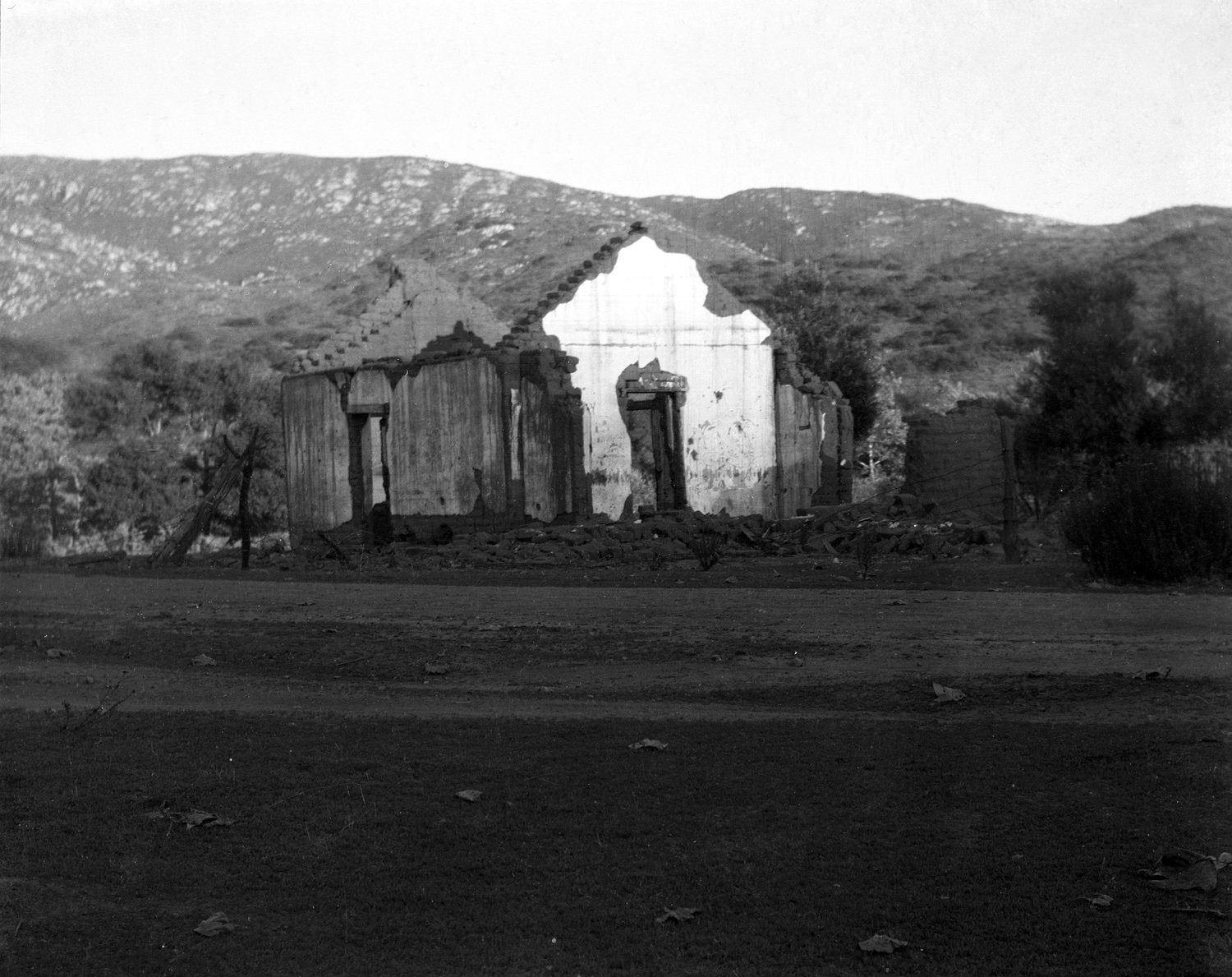
On a Monday night in March 1899, around twenty to nine, fire took the ramada at the winery and ran into the adobe and a frame addition. Things were saved. The wine was not: barrels charred, the contents nearly boiled, unsellable without new wood. Parker, writing afterward, did not treat the fire as weather. He had heard a noise in the winery minutes before. Neighbors he named — Lusardi among them — had not come to help. Alexa Clausen reads it as a revenge fire, the kind of night that most likely destroyed much of Parker’s holdings at the time. A letter can raise that charge. A later historian cannot close it. What the paper trail will support is the loss, the fear in the household, and Elena not sleeping.
Five years later the argument moved into the newspaper. On 8 June 1904 George Connors protested the Dears’ winery as a “baneful and malign influence.” The Aliso community told the county that a winery and a local bar would be a disturbance to the schoolchildren. Parker’s petition to manufacture and sell wine from the old adobe was denied. Whatever the merits of Connors’ complaint, the notice is a gift to later historians. Agriculture is often inferred from soil and from later trees. A dated, named, adversarial proof that wine was not a metaphor on this ranch is rarer. The Dears were in the business, however modestly, and someone next door objected — citing the school the last chapter named.
The present vineyard on the property is not a reenactment of 1904. It is a continuation of the same bet: that this hillside will ripen grapes, and that a small lot of wine can belong to a place rather than to a brand. Grenache and Syrah take the heat; from them the ranch makes both rosé and red, shared with friends and guests, not sold. The olives keep their own counsel. Visitors who walk from the adobe to the vines are moving through a land use that is older than the ruin and younger than the sycamore.
This portion of Escondido was known at the time as Aliso and was generally an agricultural area with landowners growing grapes and olives, among other crops.
Sources for this chapter
- Hagen, Sue. The House Elena Built, 2024. Parker’s 4 June 1895 letter; the March 1899 winery fire; Connors’ protest of 8 June 1904.
- Huntington Library. Cave Couts Papers. CT 544, Parker Dear to Elizabeth B. Clemens Couts Schrader, Las Violetas, 4 June 1895.
- San Diego Union, 8 June 1904. Notice of Connors’ protest of the Dears’ winery.
- San Diego Union, 8 September 1904. Fight “by the winery,” recalling 1898.
- San Diego History Center, Adobe Archives. Early adobe at Aliso Ranch, later the winery. Catalog 55720.
The same knoll
Stand here for a day.
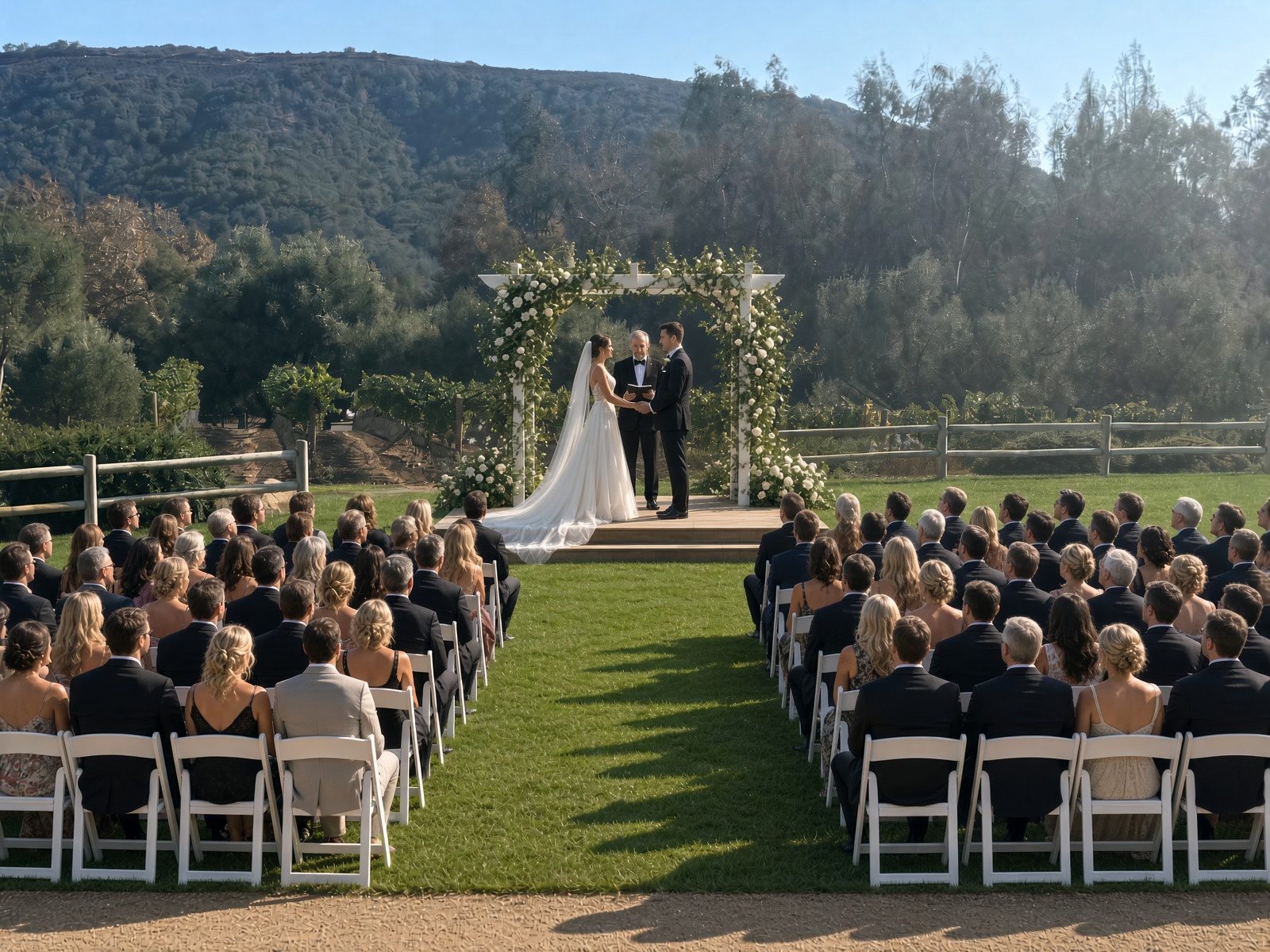
Gatherings of up to seventy-five. A ceremony on the south lawn, cocktails on the terrace, dinner outside. The suite is booked only on Airbnb.
Inquire