

Chapter VII · 7 of 12
The Inquest of 1898
A neighborhood that had not welcomed the Dears, a shooting on the path to the winery, and the jury that sat in the adobe.
Listen
Told by Eve
Four and a half minutes. The inquest file, the family’s letters, and the Los Angeles Times of 2 September 1898.
Parker Dear and his family do not seem to have been welcomed into the clustered Aliso community after Elena’s purchase of the Minter homestead and their move in May 1895. The source of the trouble and the resentment has not been made clear from the documents. From the Dear family’s point of view, Aliso had become a place of “wild-west” lawlessness. They too added to that reputation on a very tragic, and revealing, night on their own ranch — between the newly constructed adobe on the knoll and the old adobe below, by then the winery.
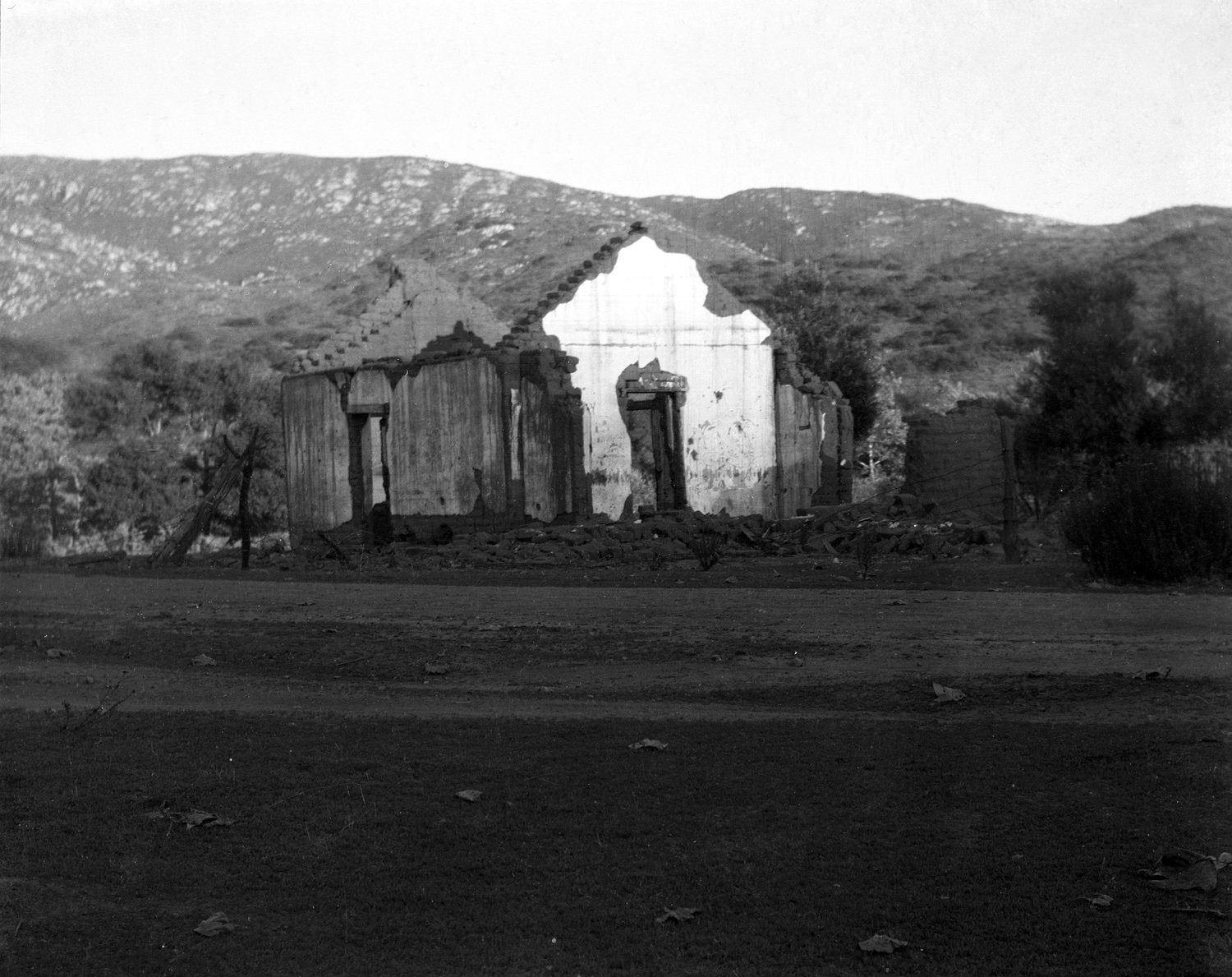
On the evening of 30 August 1898, between seven and eight o’clock, sixteen-year-old Parker Dear Jr. shot Ramon Morales on the path between those two buildings. Morales was about twenty-five, known in the valley as Palone. He had worked for the Dears after they arrived — begun, the boy said, some three months after the family came, stayed a year or a little more, eaten at their table. He came that night for wine and was refused. The next day, 31 August, a coroner’s inquest was held at the residence of Parker Dear, Aliso Precinct, Township of Encinitas, County of San Diego. The house was the courtroom. Parker Jr. claimed self-defense.
The file is Case 548, F116-1, in the San Diego County coroner’s papers. The witnesses were the neighborhood. Parker Jr. testified; so did his brothers James, thirteen, and Gilbert. Elena — recorded in the transcript as Helen Dear — had been at her brother’s in San Luis Rey. She came home that morning and testified to earlier trouble. Parker Dear Sr. testified. So did deputy constable H. H. Black, Dr. G. R. Bowles, James Connor, George Connors, Francisco Lusardi, Pablo Mesa (Choppo), who had worked for Dear at Santa Rosa, L. A. Brown, and Jose Morales, Ramon’s brother. Jurors included a foreman named Miller, Peter Lux, August Schmidt, and Ferdinand Koehn — school-census names from the chapter before.
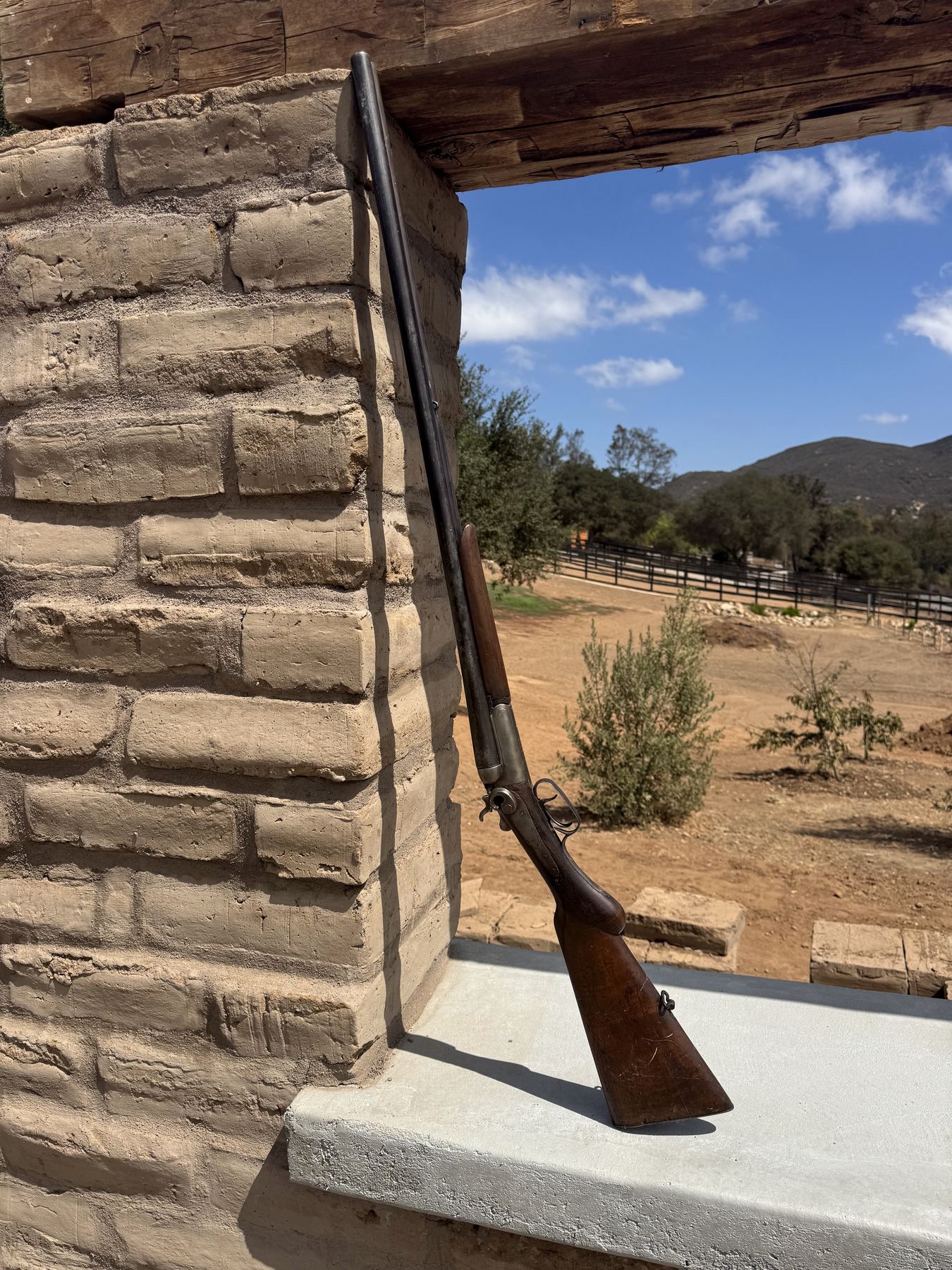
The sequence the testimony describes is short and ugly in the way rural files are short and ugly. Morales wanted a gallon of wine at the winery and was told no. He came off the horse. A rock. James’s Hollenbeck twelve-gauge, double-barreled, was in the house; Jimmie brought it down. The shot was on the path, sixty to a hundred yards from the residence, near the winery where the barrels stood. Black, riding over from a mile and a half up the cañon, found Morales on that path, searched him, found no weapon, and told Parker Jr. to consider himself under arrest. A Los Angeles Times notice of 2 September 1898 reported the jury’s verdict as justifiable homicide, and that Morales “had a bad reputation, being a quarrelsome fellow, especially when in liquor.” We take that wording from the newspaper, not from a reconstructed certificate.
The inquest is more than a shooting. It is a measured drawing of the ranch: winery, path, rain gauge, schoolhouse, creek, Lusardi next door, Connors over the way, a private road versus the county road, barrels, the old house, the new one on the knoll. A later sketch in the ranch archive still tries to lay that testimony onto the ground. It is also a record of fear as the household described it. Francisco Lusardi, Parker Sr. said, had posted a two-hundred-dollar peace bond for Morales. Friends and the district attorney, he said, had told him never to go unarmed in this neighborhood. Elena testified that she had lived in constant dread of the man. James Connor, who had lived in the valley fifteen or sixteen years, had known Ramon since the man was a small boy, had employed him three and a half years, and said he was a good worker when sober. That sentence is in the same file as the shot.
The inquest does not ask a later reader to love anyone. It asks us to notice that Aliso was dense: school, winery, two adobes, and neighbors close enough to hear a gun at supper. George Connors, eating at home, heard the shot. James Connor, on his porch, saw people move on the path. The Lusardis were next door. The schoolhouse was on the ranch. A local history that omitted this file would be cleaner than the ground supports. Six years later, on 8 September 1904, the San Diego Union reported another fight involving Parker Dear Jr. “by the winery” — “the same winery near which, six years ago, young Dear shot and killed Ramon Morales.” The paper still oriented the neighborhood by that evening. We do not publish a likeness of Morales. We do not invent dialogue the stenographer did not take. The adobe’s character in the 1890s includes this inquest. It is part of why the house is not only a pretty ruin.
The coroner’s jury, which held an inquest Wednesday, returned a verdict of justifiable homicide.
Sources for this chapter
- San Diego County. Coroner’s Inquest Papers, Case File 548, F116-1, Ramon Morales. Inquest held 31 August 1898 at the residence of Parker Dear, Aliso Precinct, Township of Encinitas.
- Los Angeles Times, 2 September 1898, p. 15.
- San Diego Union, 8 September 1904. Notice of a later fight “by the winery,” recalling the 1898 shooting.
- Clausen, Alexa. Notes on the Dears’ reception in Aliso and the ground between the knoll adobe and the old adobe, 2026.
- White, Greg. Photograph of a double-barreled twelve-gauge on the knoll adobe, 2026. Of the type named in the inquest.
- San Diego History Center, Adobe Archives. Early adobe at Aliso Ranch, later the winery. Catalog 55720.
- Narration, Eve. The inquest file, Parker Dear’s letter to Cave Couts Jr., and the Los Angeles Times, 2 September 1898.
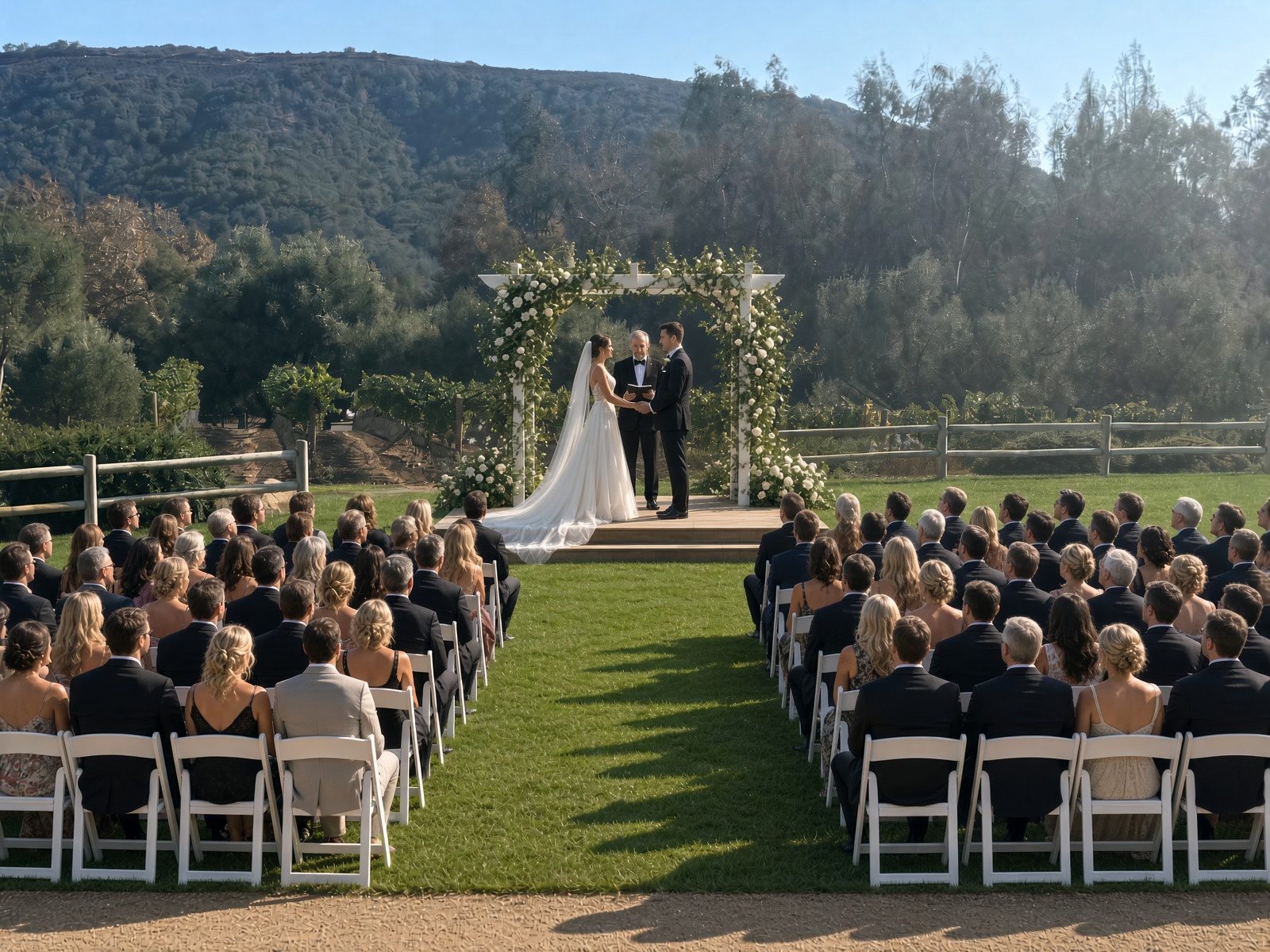
The same knoll
Stand here for a day.
Gatherings of up to seventy-five. A ceremony on the south lawn, cocktails on the terrace, dinner outside. The suite is booked only on Airbnb.
Inquire