
Chapter VIII · 8 of 12
Imogene and Walter Sailor
Renters, 1904 to 1909. She wrote the knoll into Out West. He told a newspaper about it seventy years later.
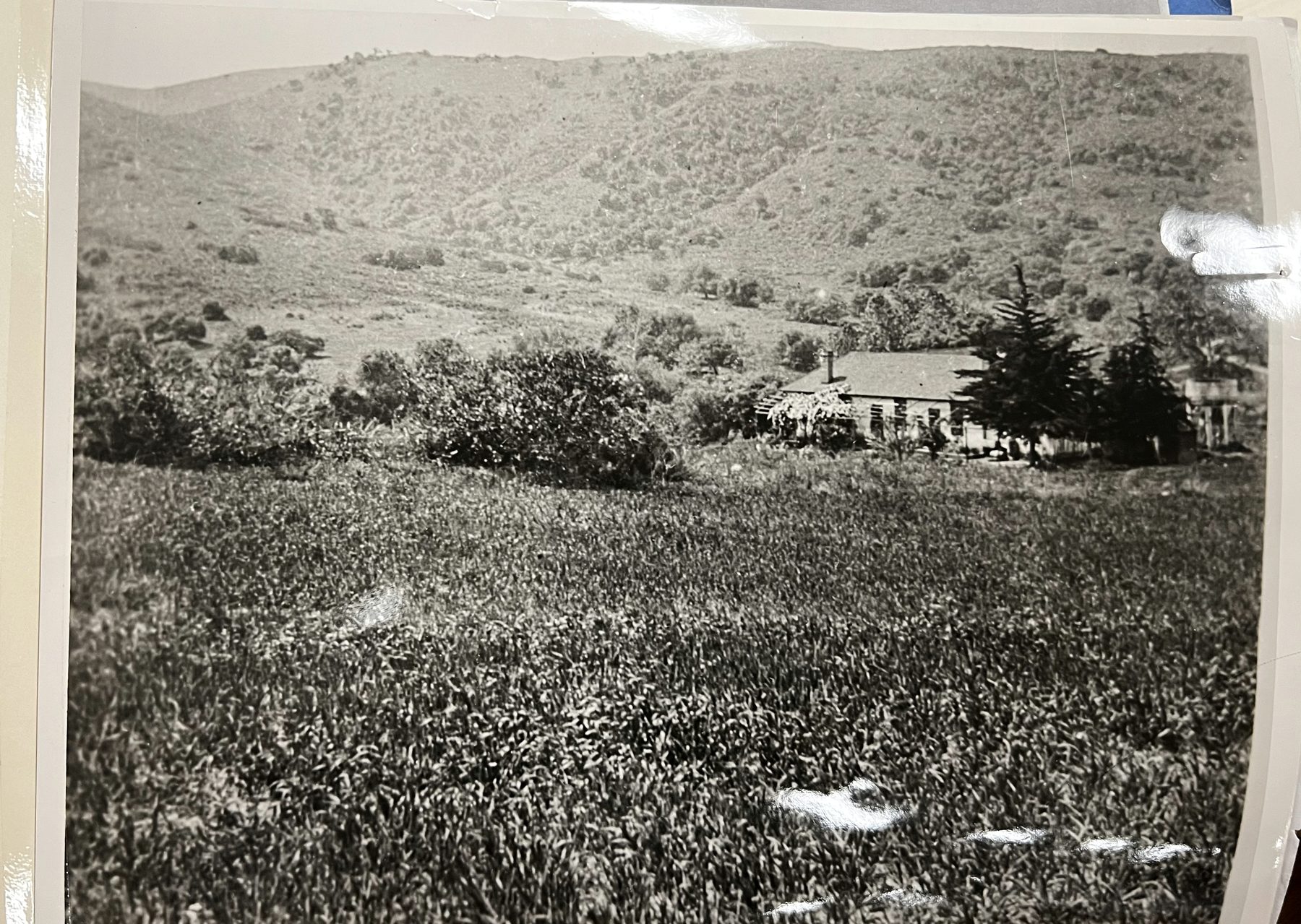
When the Dears left, the adobe did not go empty. Alexa Clausen’s occupant table puts Imogene Sailor on the ranch from 1904 to 1909 — Walter her son, and with them Annie Mitchell, Egbert, Dortha. They were renters, not owners. The knoll house was still a house: roof on, vines in, olives standing. The 1904 photograph of Las Violetas in its prime is also a photograph of the building they moved into.
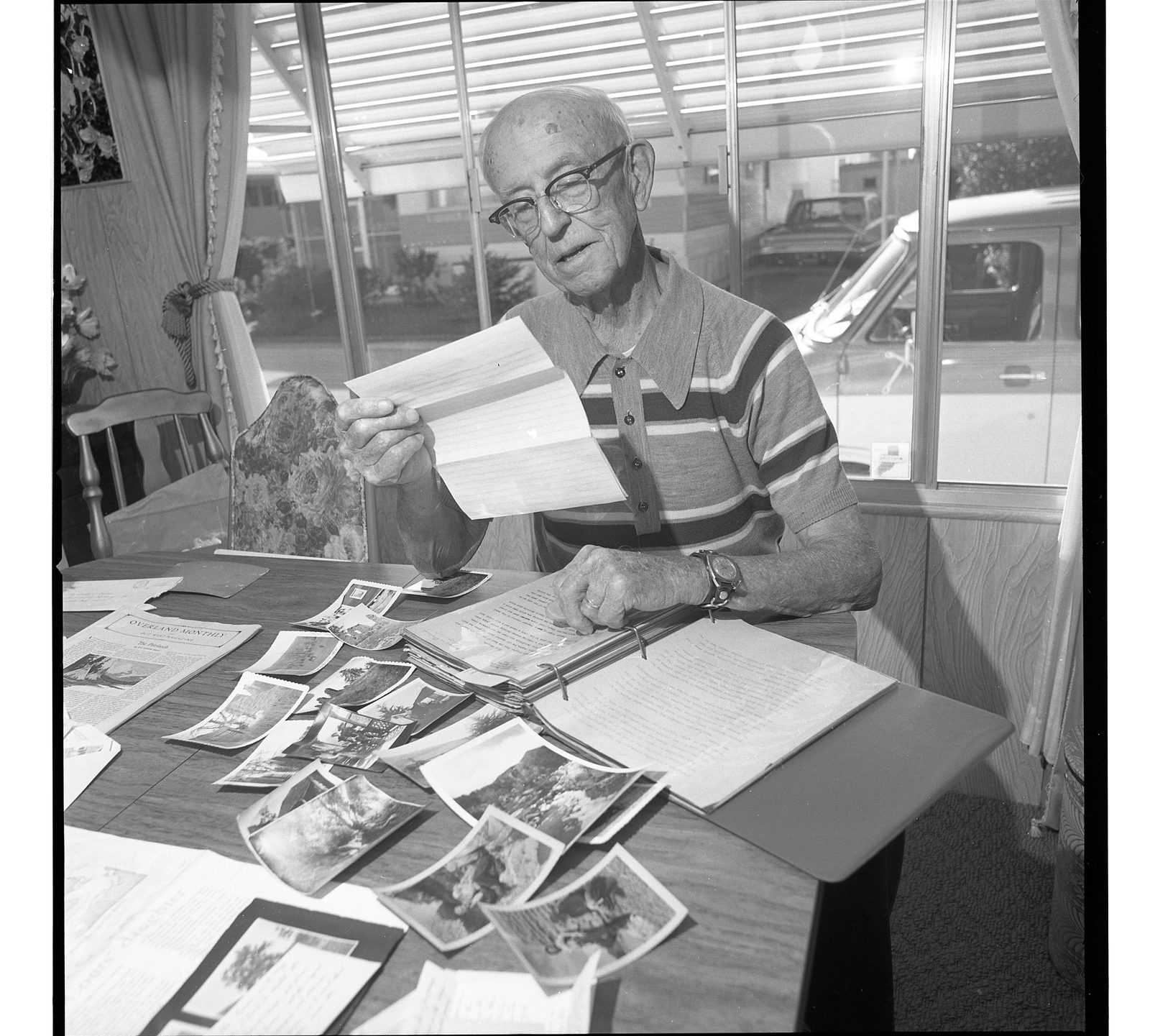
On 23 November 1975 the Escondido Times-Advocate printed “Sailor recalls days of Dear Ranch.” Walter was eighty-one, a retired Escondido businessman. He said the family had come to Escondido in 1898. His father, James W. Sailor, died in 1902. His mother, Imogene, wrote stories for Out West Magazine. They lived at Dear Ranch — the paper still used Minter in the same breath — and he walked to Aliso School. They farmed. By 1909 he was in the plumbing and hardware trade in town. That date matches the table: the Sailor years on the knoll end when Walter’s working life in Escondido begins.

The 1975 clipping ran a photograph of the adobe “as it appeared in 1905,” and said Walter had lived there as a youngster. He remembered Indians in the valley, rattlesnakes, the vineyard, the olives, the long adobe on the knoll. Those are a boy’s memories, told at eighty-one. They are not a deed. They are the first household after Elena that we can hear in its own voice.
Imogene published. In October 1927 — eighteen years after they left the creek — Overland Monthly and Out West Magazine printed her short story “Noon Shadows.” The ranch in the story is named Escobar, not Aliso. The ground is not. A long adobe on a gently rising knoll. Oak and sycamore. A tumbling stream. A vineyard, a gravel path, a county road cutting through at the back. A woman sits under an oak with a book and watches two figures in blue calico walk toward the back door at noon. They are, the tale decides, ghosts of a wedding fiesta forty years gone — a boy dead on a knife, a mother and an aunt who did not recover. That plot is fiction. We do not enter it as a ranch document. We do enter the setting as the work of a woman who had rented this knoll and then wrote a house that looks like this knoll.
That story is one of the springs of later Elfin Forest ghost talk. It is not the same story as the lady dressed in white in the 1986 Welcome Guide. Imogene’s noon shadows are two Mexican women on a path to an adobe, printed in a San Francisco magazine in 1927. The White Lady is a later, broader cruising-tale. Folklore borrows. It does not file citations. The honest order is: a renter wrote fiction on this ground; teenagers later hunted a woman in white on these roads; a Town Council guide tried to print both the facts and the tales. Chapter X keeps the later legend. This chapter keeps the writer who had actually slept in the house.
Walter, in 1975, still named John T. Lee as the last person to live in the adobe. Clausen’s table continues after the Sailors: a Pool family with six children in 1910; J. M. and Elizabeth Taylor by 1912; J. Chauncey Hayes Jr. renting from them. The ruin photographs of 1938 are a generation later. The Sailors are the hinge — the last household we can still hear while the roof was on.
Her position under the tree commanded a very good view of the long adobe house which was built upon a gently rising knoll.
Sources for this chapter
- Clausen, Alexa. Occupant table in Palomar College Field Excavation Manual. Imogene Sailor, 1904–1909; Walter her son; Annie Mitchell, Egbert, Dortha.
- Times-Advocate (Escondido). “Sailor recalls days of Dear Ranch.” 23 November 1975, p. B-8. Walter Sailor, then 81. Full page in Newspapers.com (Daily Times-Advocate) and Escondido Public Library Digital Reel. No institutional Sailor family papers located; childhood prints visible in the 1975 photograph remain in private or press files.
- Sailor, Imogene. “Noon Shadows.” Overland Monthly and Out West Magazine 85, no. 10 (October 1927): 305ff.
- Hagen, Sue. The House Elena Built, 2024. Later occupants; Walter Sailor’s telling of John T. Lee as last resident.