
Chapter IX · 9 of 12
Photographs and Ruins
One photograph of the adobe in its prime — then 1938, the neighboring adobes that did not survive, the 1960s, Perkins’s last stub of wall, and a line of stones in the yard.
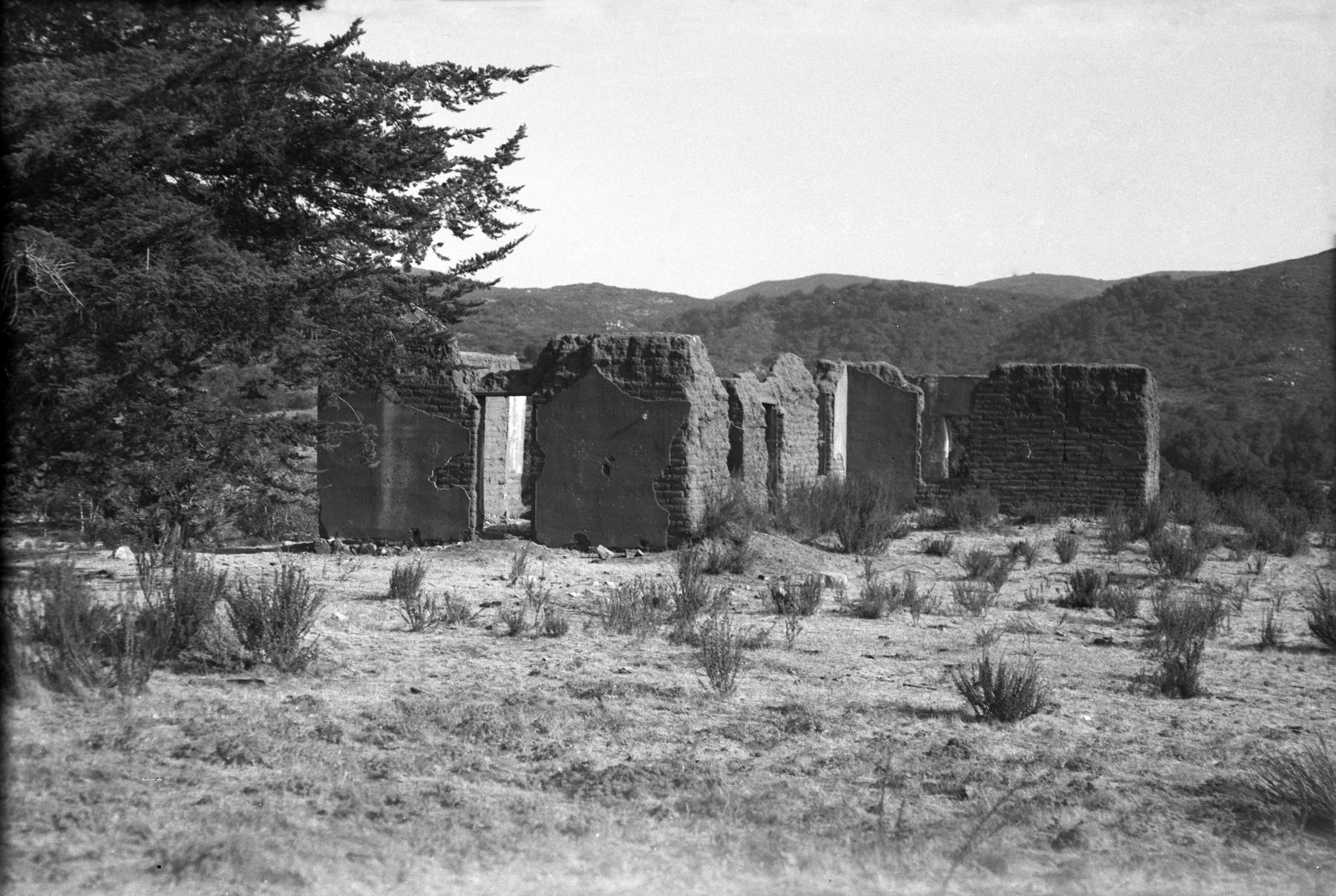
One photograph of the adobe in its prime is known. It sits in the San Diego History Center’s Adobe Archives. The print was filed there as Rancho Santa Rosa — Parker Dear’s grant ranch at Temecula — and is not that house. This is Las Violetas. The date is likely about 1904, the year the Dears left. Hagen, working from the Center’s file, published the same view as about 1912. Either way it is still a house. You can look at that picture and believe in walls.
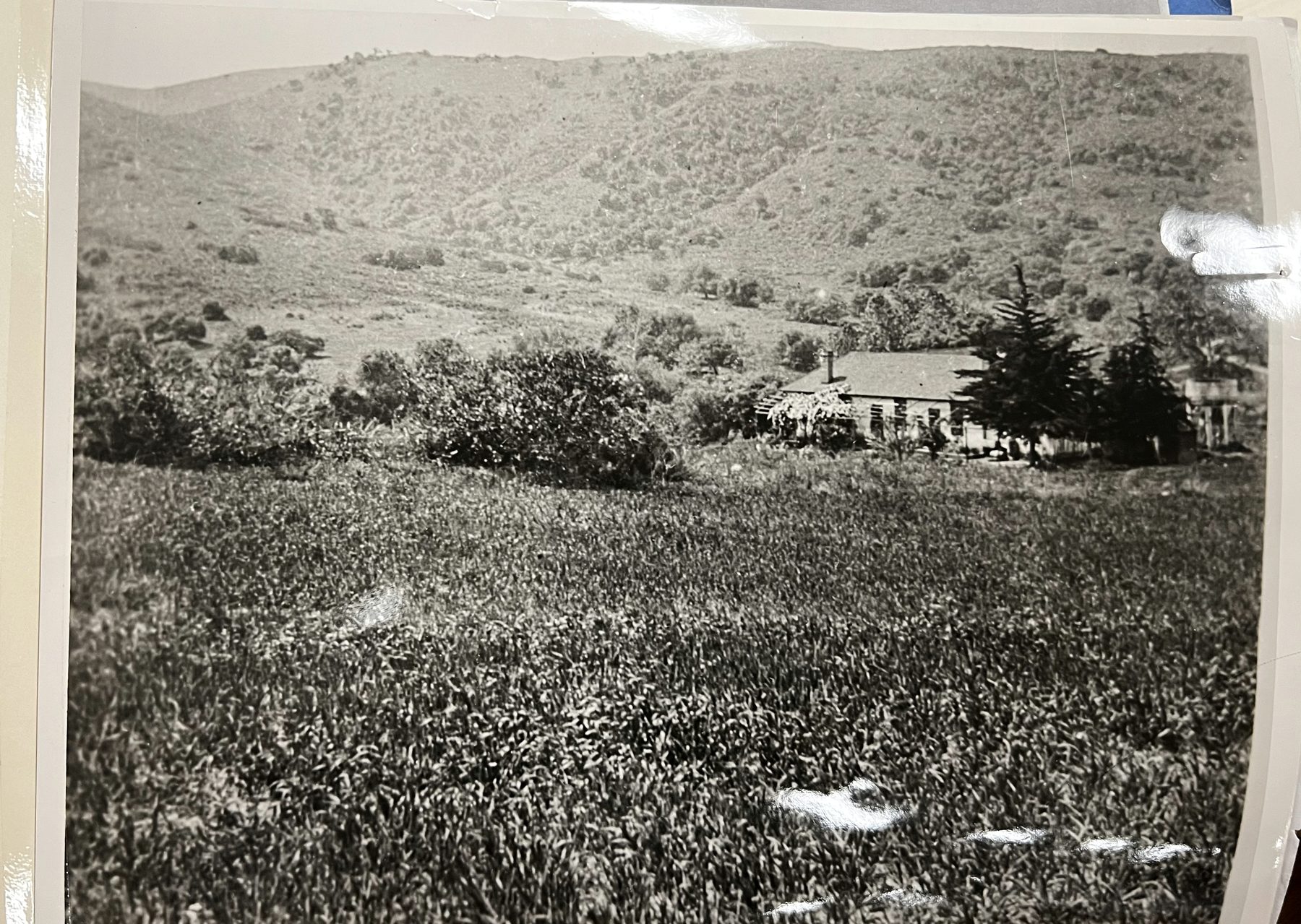
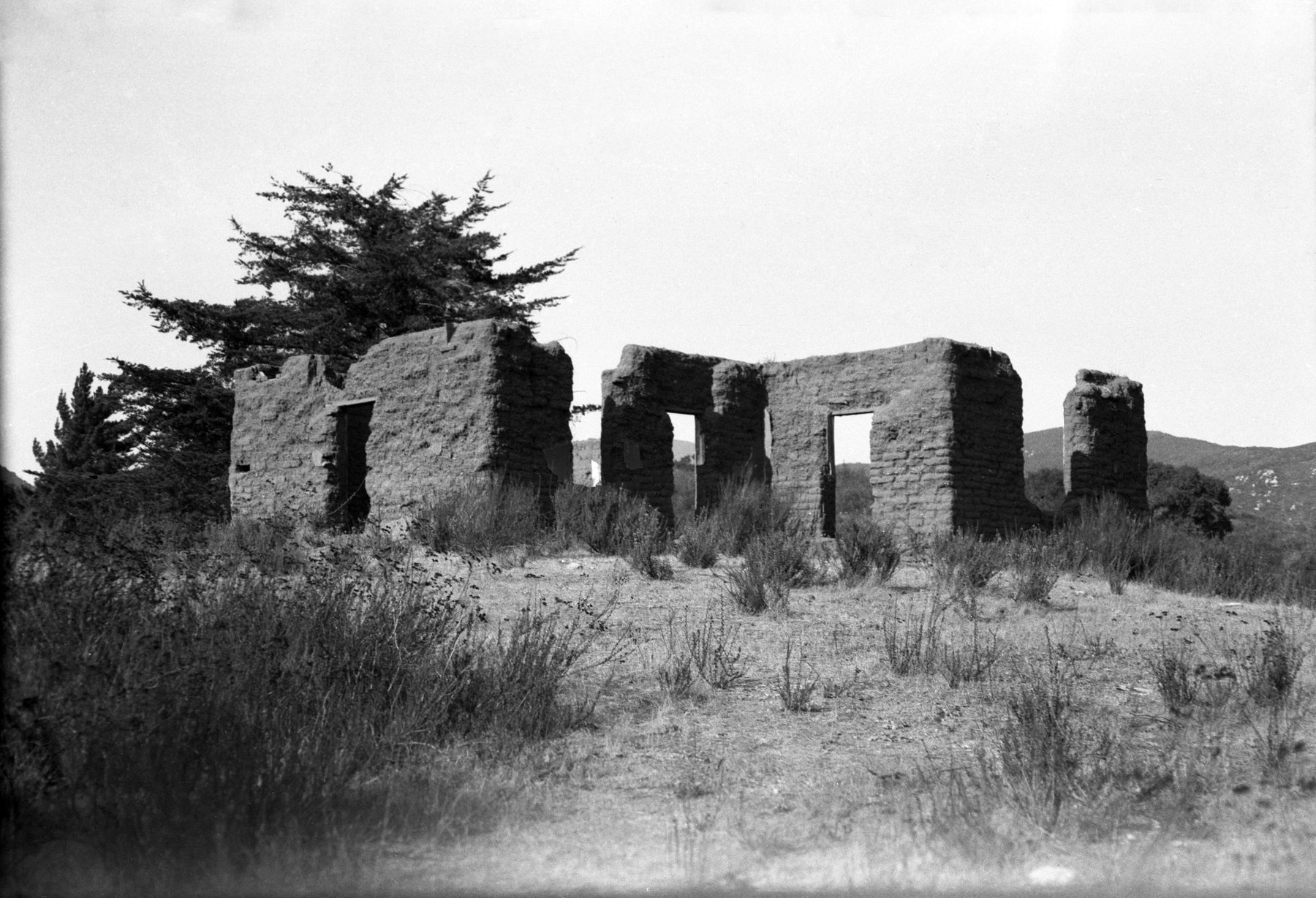
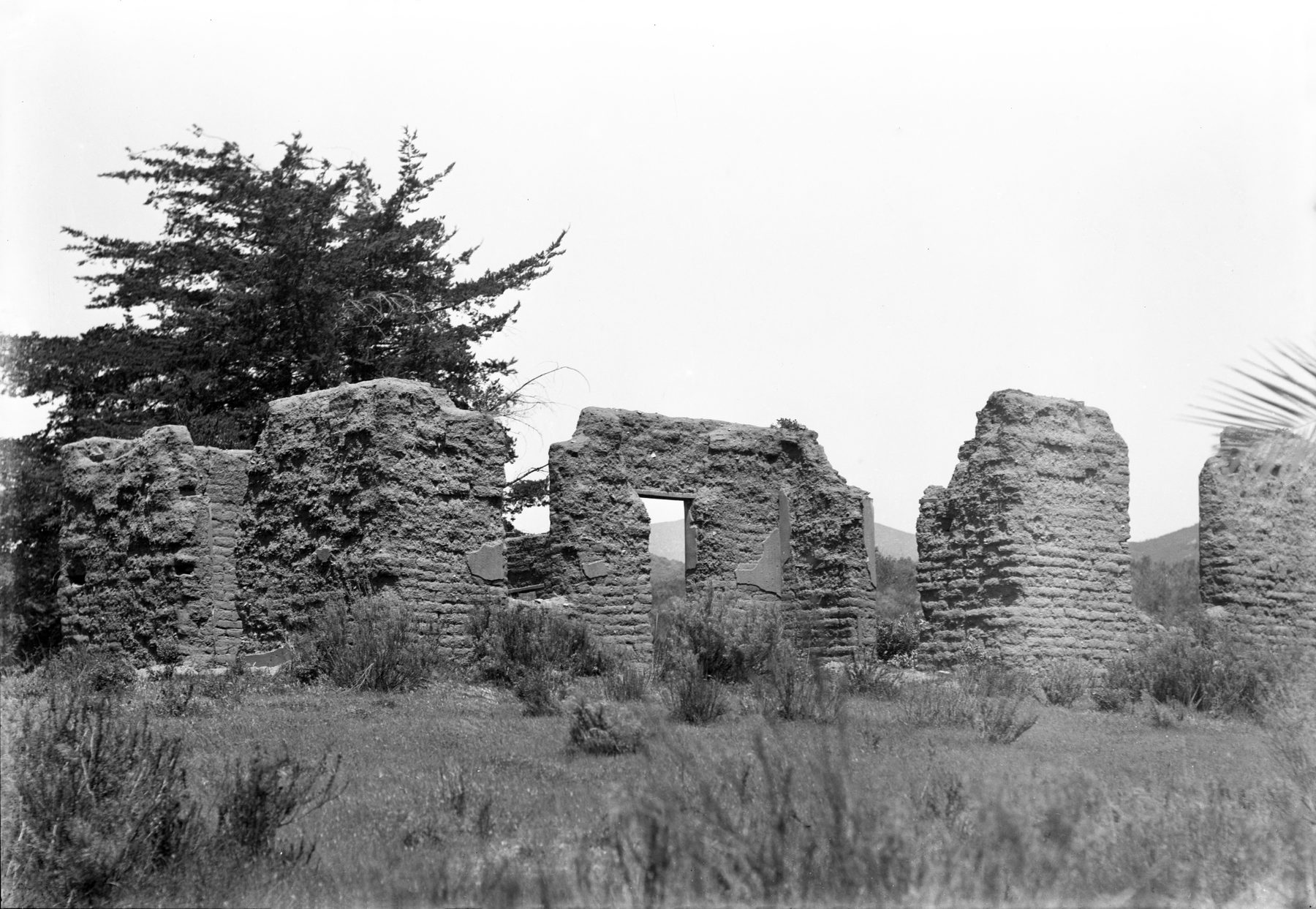
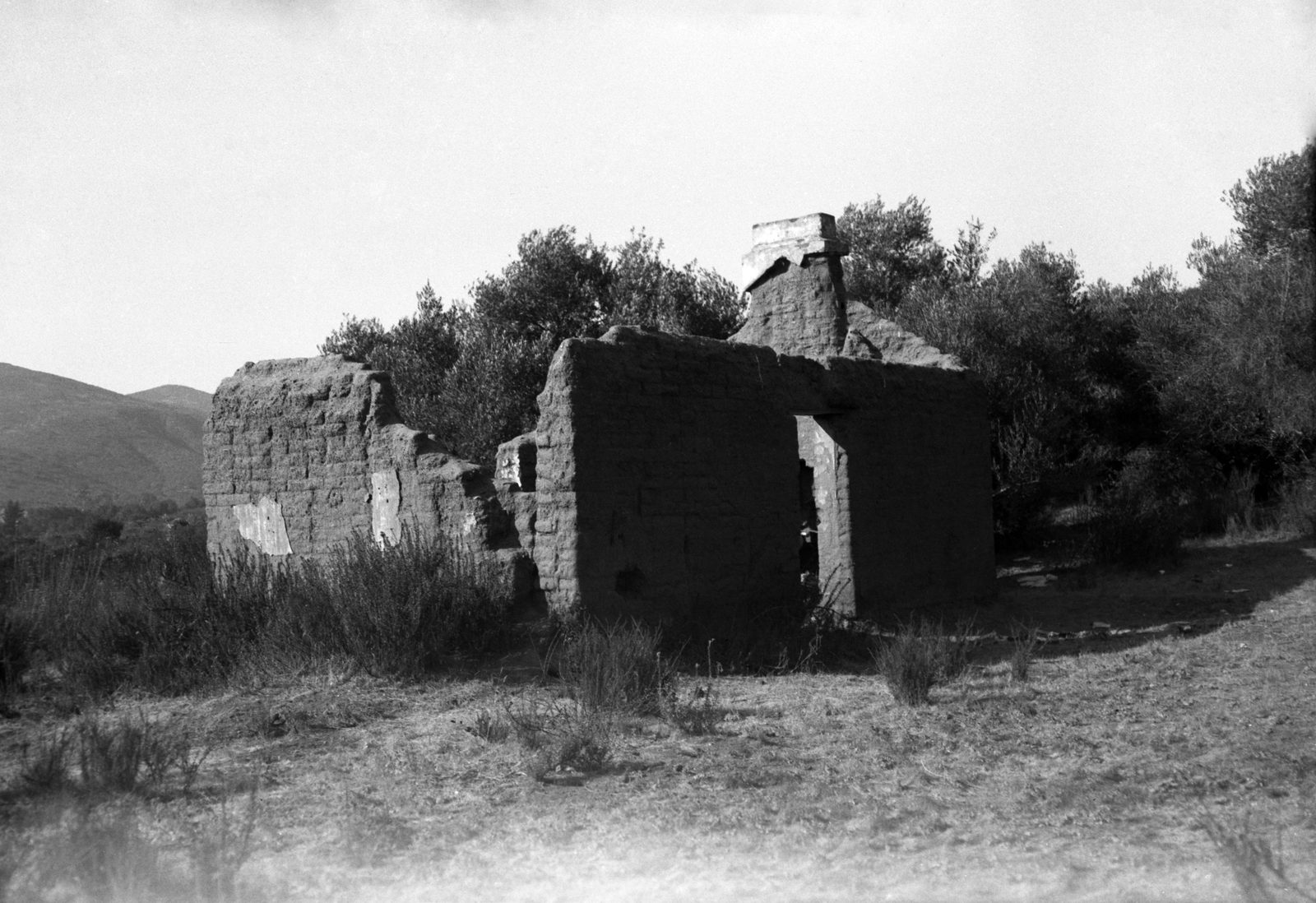
By October 1938 the San Diego History Center’s negatives record the adobe as a ruin that still has a plan. Roof gone. Door and window openings empty. Plaster hanging in islands on the brick. Three views — 1899.3-104, 1899.3-105, and 1899.3-107 — show a cypress, the knoll, and the hills behind. The third was filed under Capt. Albert Smith’s name. That is a mislabel: Smith’s adobe is a different house. These walls are Aliso’s. After about 1925 the place had been severely vandalized; later excavators would feel that as a thin artifact assemblage. Adobe is honest about time. Without a roof and a caretaker it slumps. The 1959 Harmony Grove guide already had the ruins in use as a pen or stable.
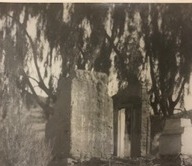
The misfile names a real neighbor. Capt. Albert Smith’s adobe was another house, and it did not survive. Neither did the Connors adobe, nor the Lusardis’. Those households are all over the school census. They made Aliso a neighborhood. Their walls are not on the ground. A 1936 print, believed to be Smith’s, already shows a doorway and a chimney under a tree, the yard gone. An undated photograph, believed to be the Connors place, shows the same ending further along: the roof gone, the chimney still standing, brush in the openings, the hills behind. Lusardi remains a name on the roads. Bumann Ranch still stands, and it is the comparison people reach for when designation comes up — a different kind of survival, not this adobe. Of the adobe homesteads of this canyon, the knoll house is the one whose stones were still here to find. That is what the restoration is for. The others remain as a census line and, for two of them, a photograph.
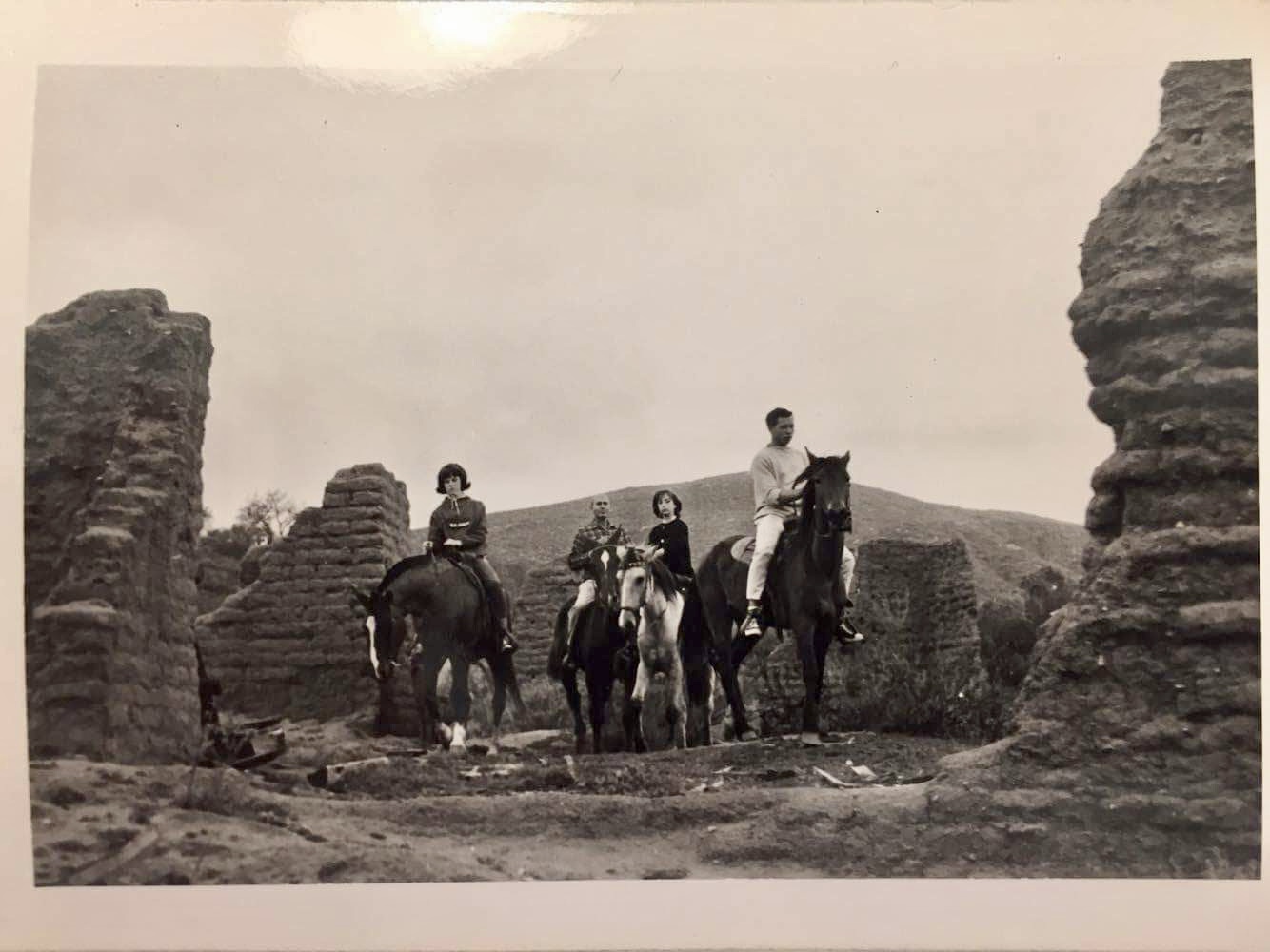
By the 1960s the walls are lower. A print later found among papers donated to the Elfin Forest Town Council shows four riders in those openings. Haircuts and shoes peg it to the mid-sixties. What remains is already becoming a rumor in the grass.
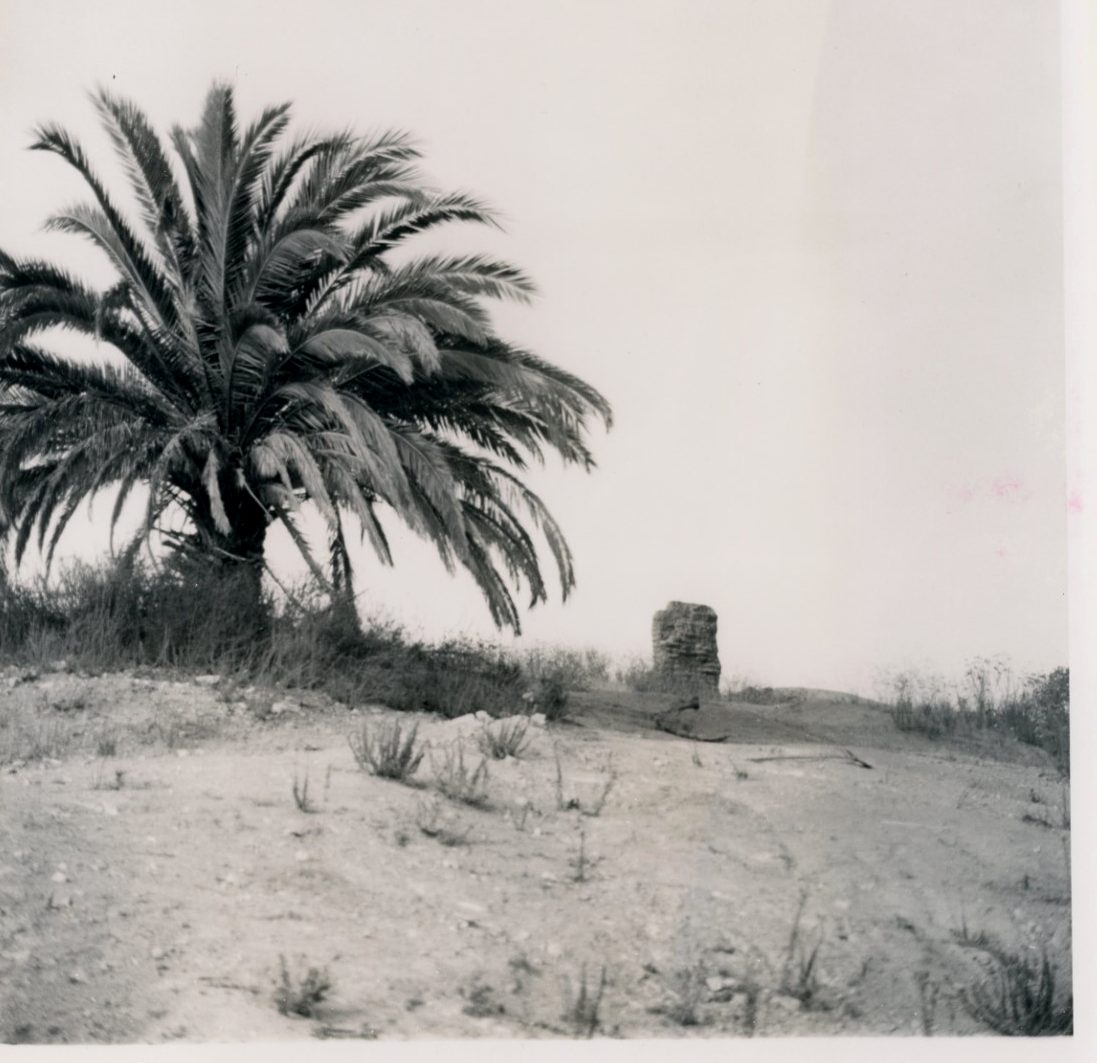
Eloise Perkins photographed Parker Dear Ranch still later. A dirt road under oaks. A view of trees and grass. Two trunks close in. And, behind a palm on the knoll, the last stub of adobe wall — Image 803 in her file, labeled Ruins of Parker Dear Ranch. The house has become a marker on a hill.
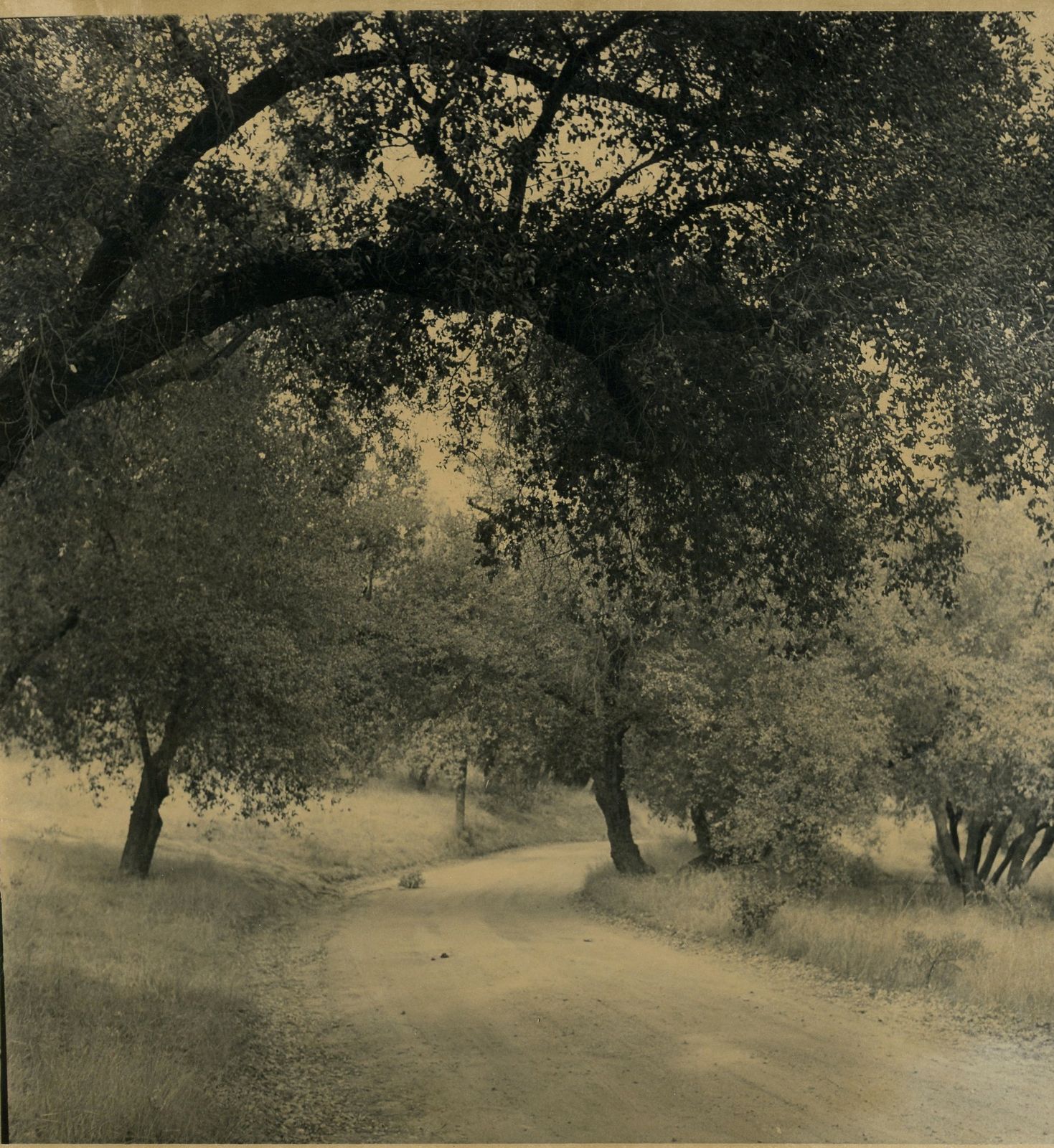
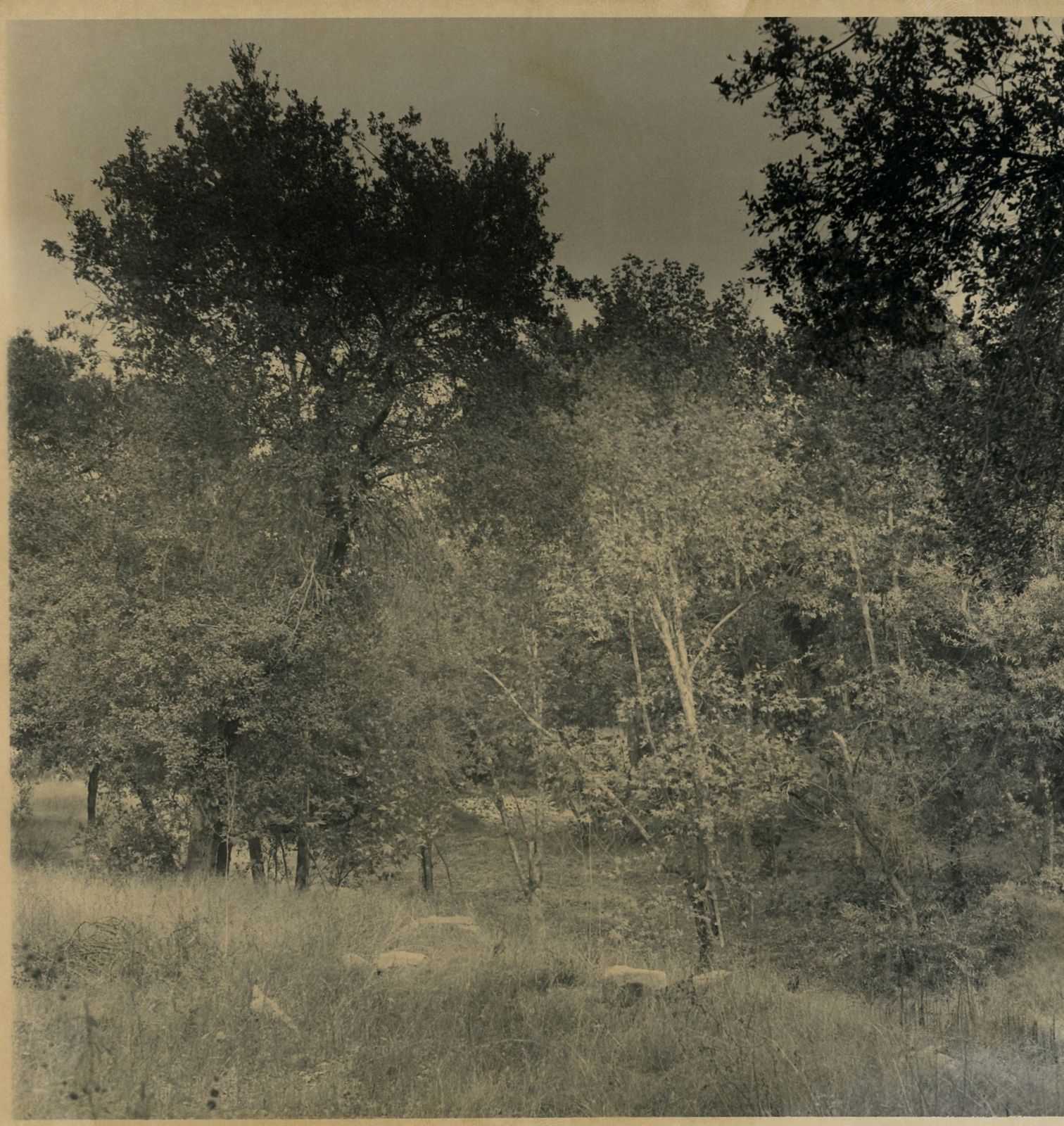
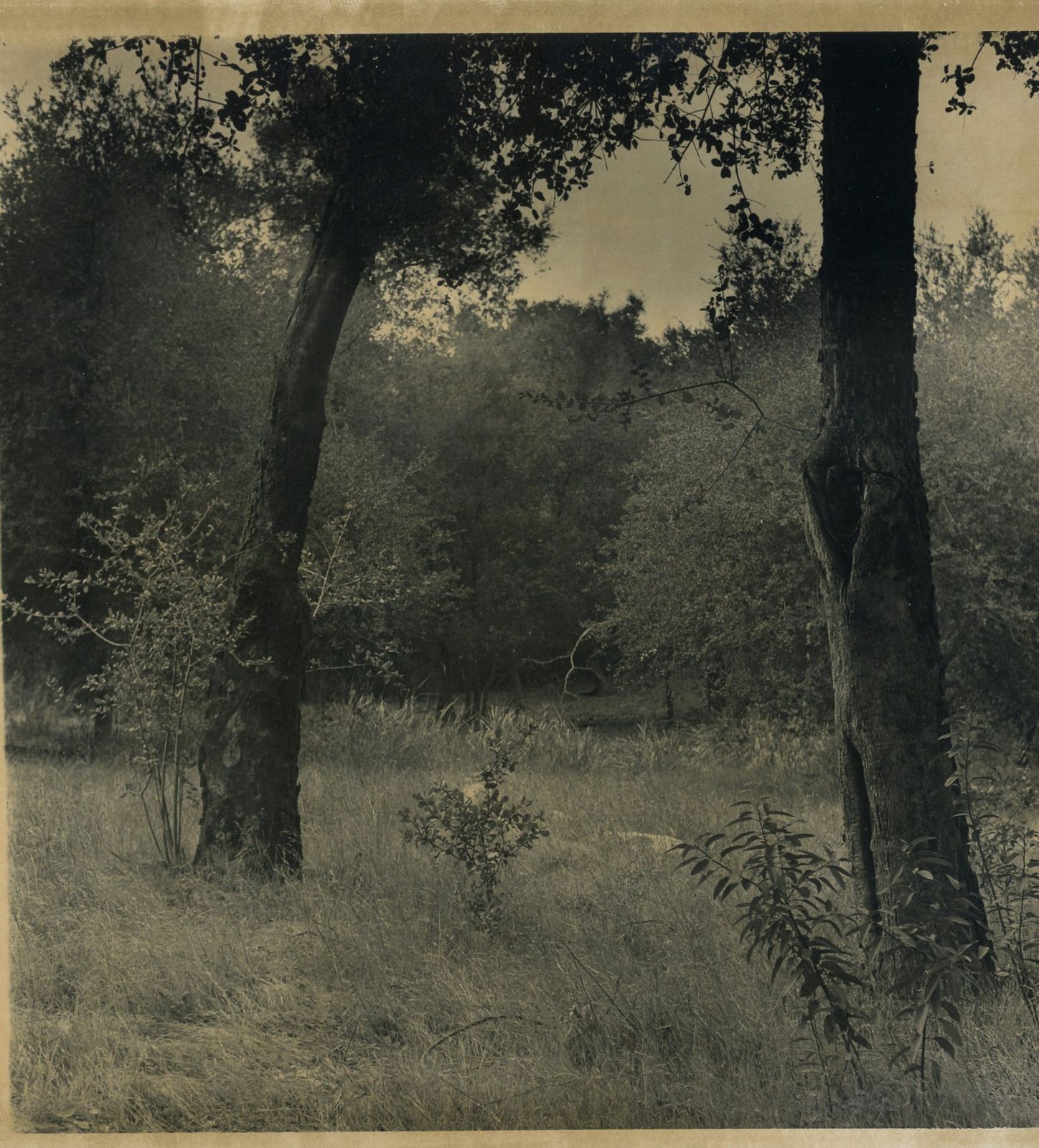
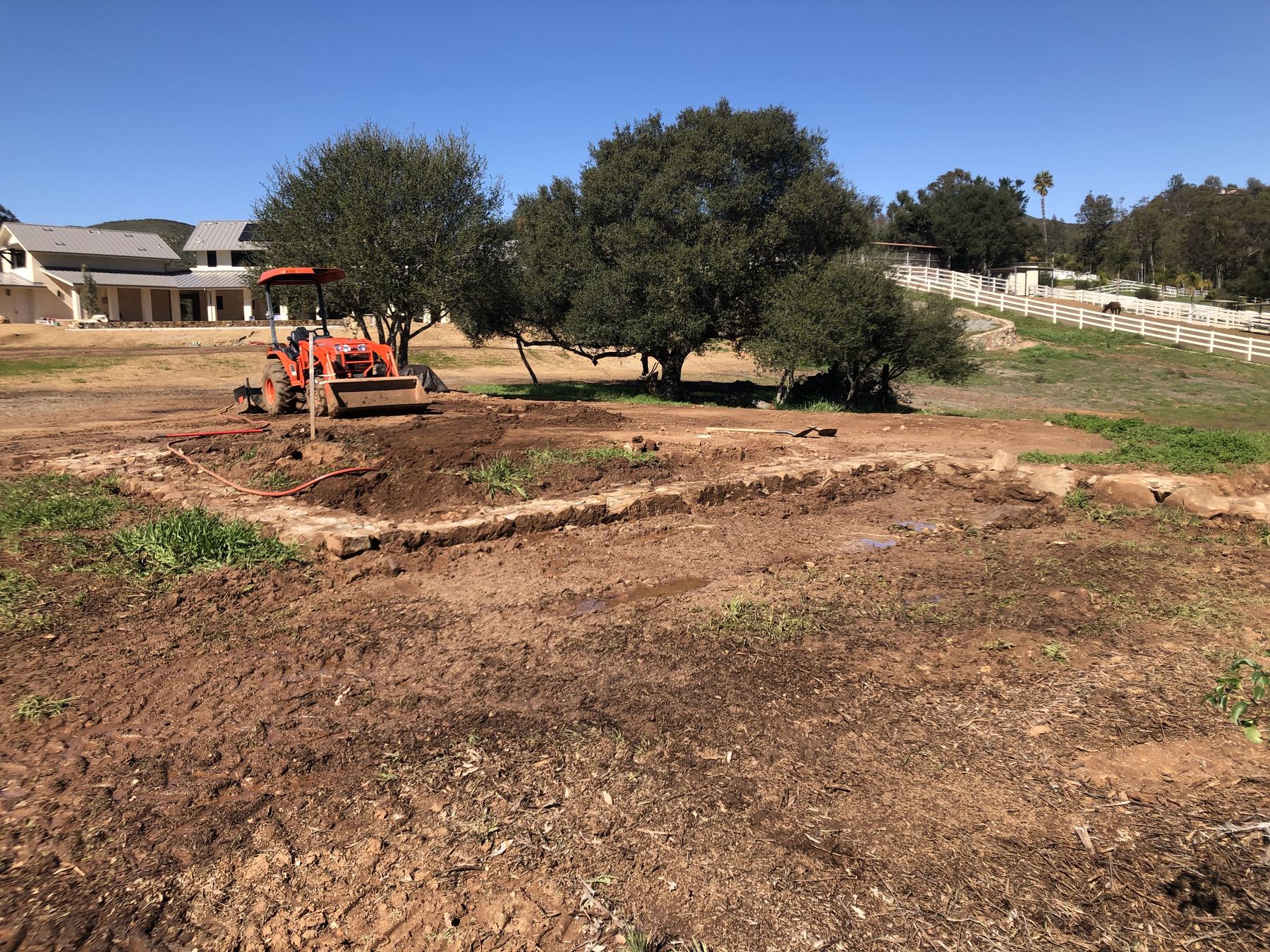
What survived for the present owners to find was that rumor made geometric — a straight line of flat stones. After the present house was up, in February 2019, Greg and Céline White began exposing the outline of a foundation in the yard. They did not yet know whose house it had been. Alexa Clausen and Palomar’s field school were still ahead. Instead of covering the stones again, they asked what they were. That question is the whole conservation ethic of this site, stated without theory.
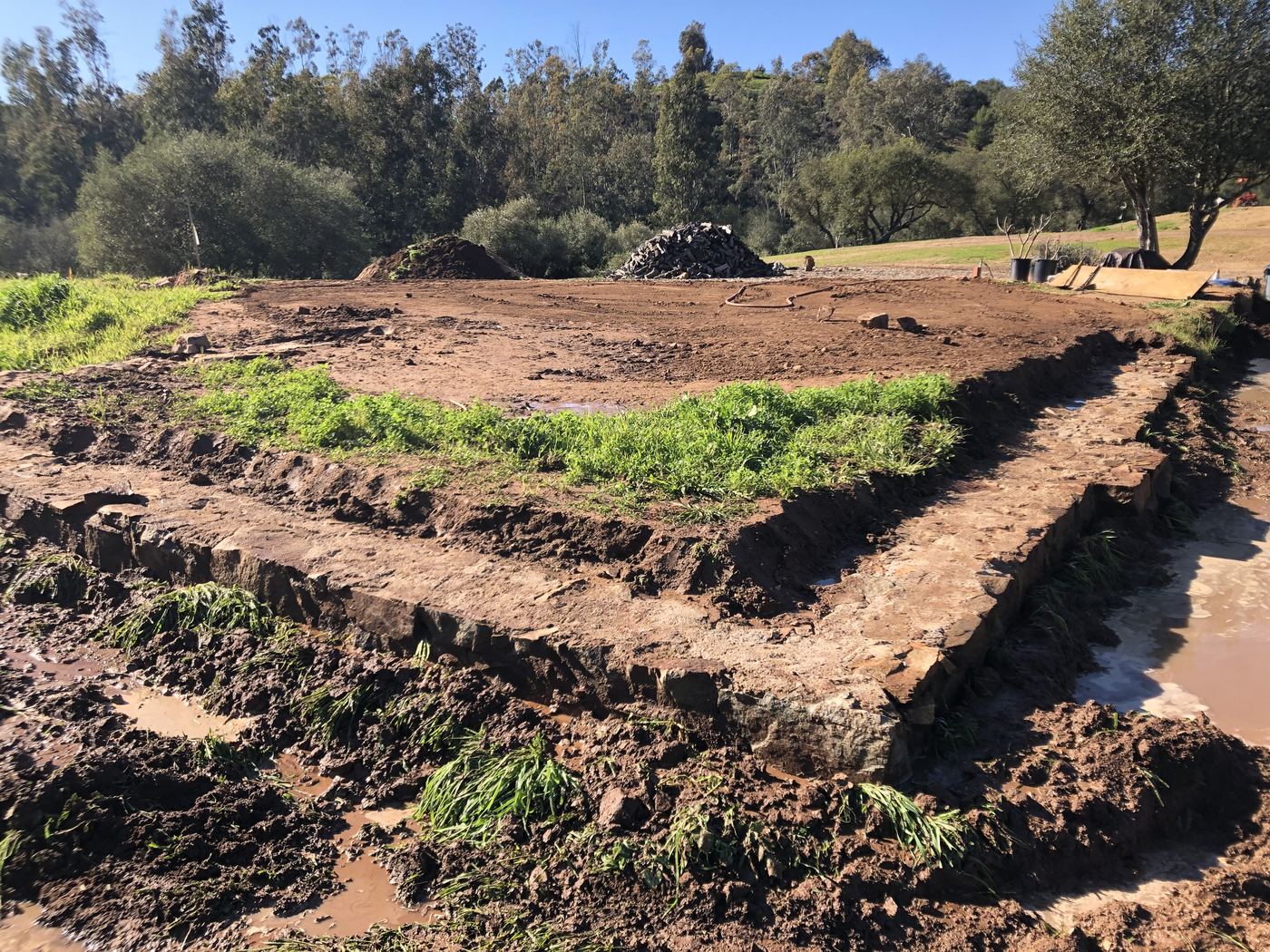
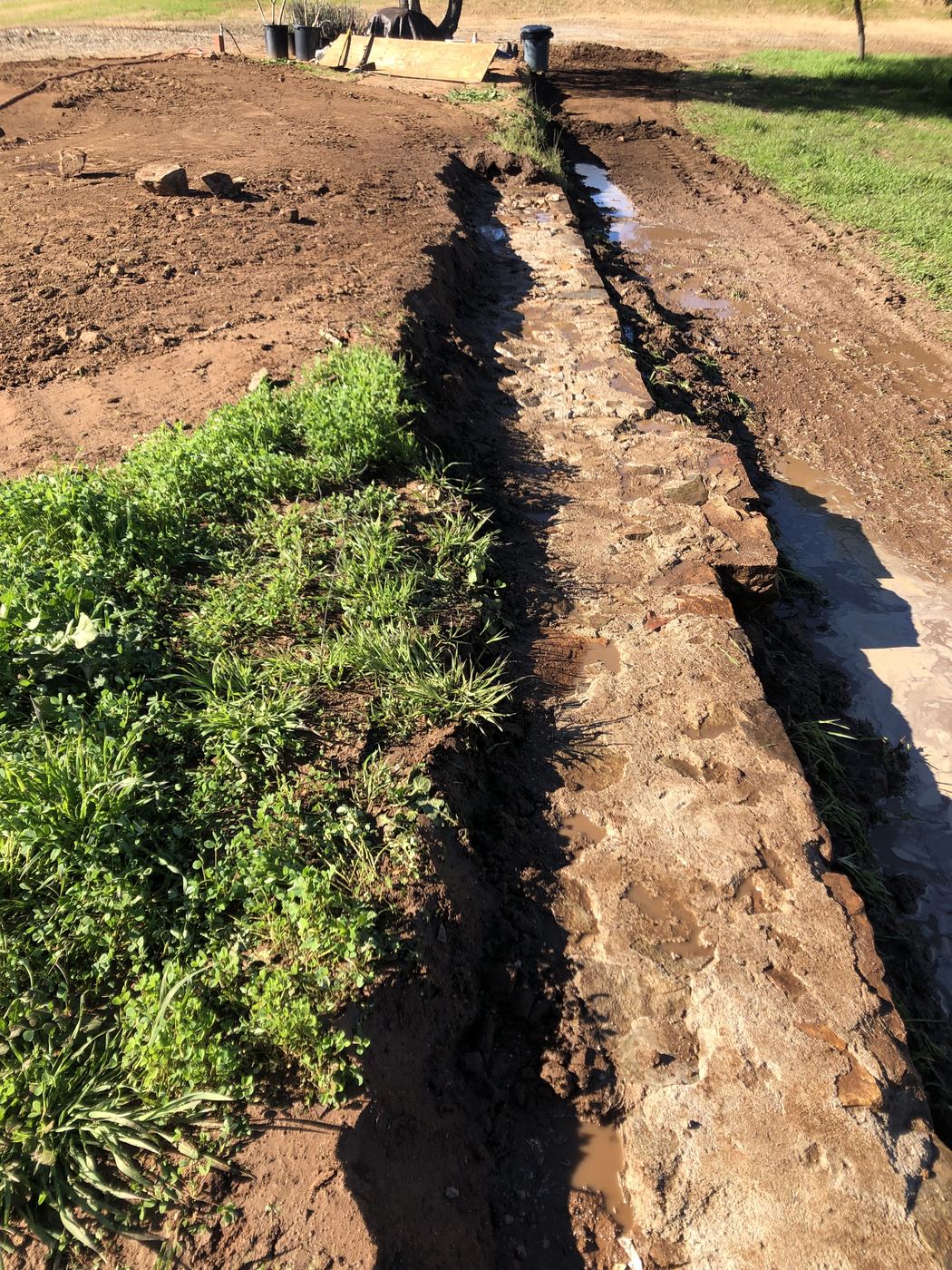
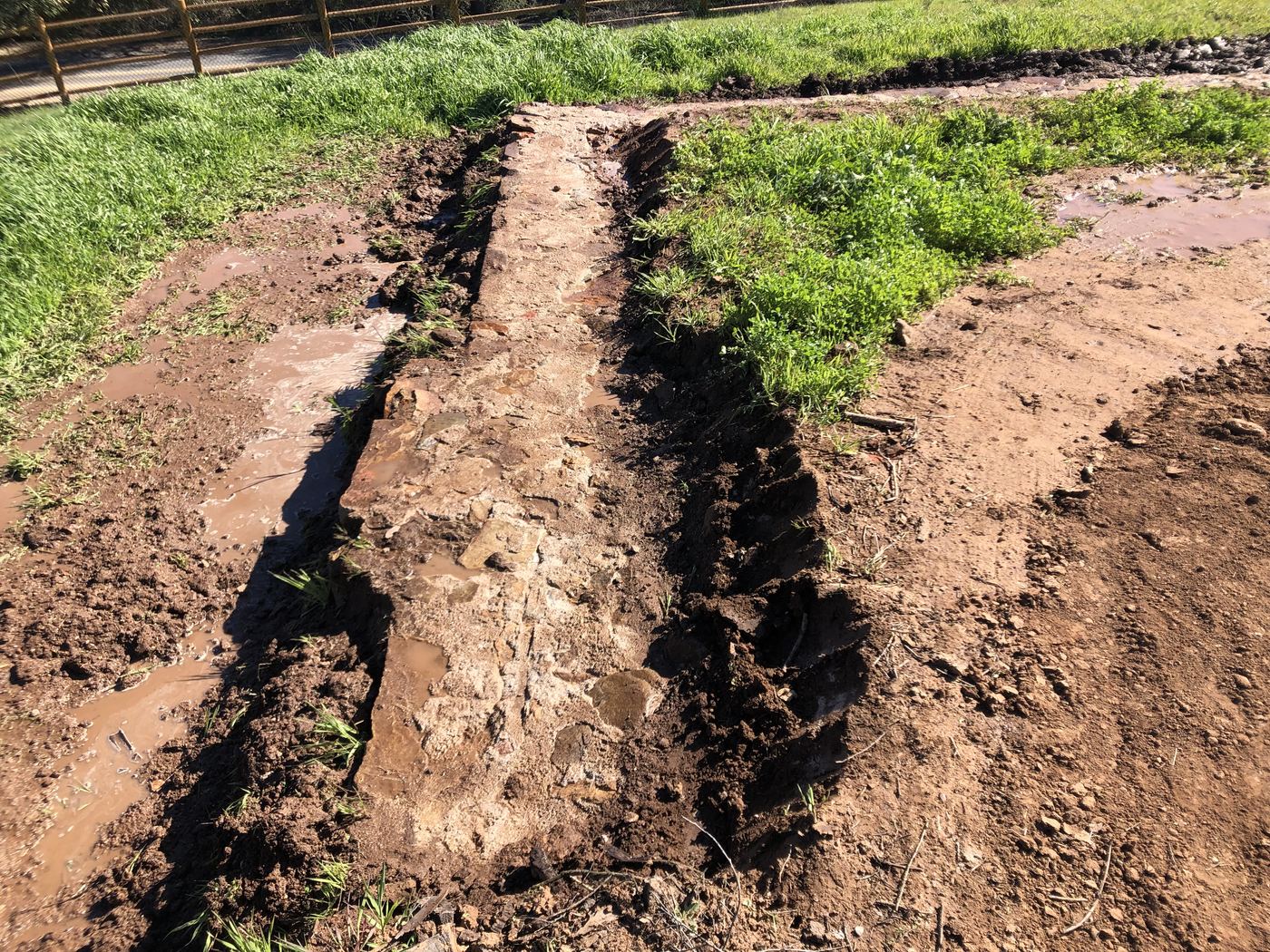
Those gaps — who slept in which room, when the last roof beam came down, how much of the vandalism was souvenir and how much weather — are why a college was invited to bring trowels. They are also why the work on the knoll now has to be named carefully. The stone foundation is a restoration. The walls going up on it are a reconstruction. No one is pretending to reincarnate 1897. Photographs, stones, and new brick are three tenses of the same sentence.
Sources for this chapter
- San Diego History Center, Adobe Archives. Photograph of Las Violetas in its prime, likely ca. 1904. Print mis-categorized as Rancho Santa Rosa (Temecula).
- San Diego History Center, Adobe Archives. Photograph of Rancho Santa Rosa, Temecula, ca. 1887. Catalog 10777, Adobes.
- San Diego History Center, Adobe Archives. Negatives 1899.3-104, 1899.3-105, and 1899.3-107, Adobe Ruins — Aliso Canyon, October 1938. The file on 1899.3-107 names Capt. Albert Smith; that is a mislabel. Smith’s adobe is a different building.
- Aliso Ranch collection. Print believed to be Capt. Albert Smith’s adobe, 1936. Undated photograph believed to be the Connors adobe.
- Hagen, Sue. The House Elena Built, 2024. Publishes the prime-years view as ca. 1912; figures of the adobe in ruin; table of later occupants.
- Elfin Forest Town Council. Donated historical collection. Photograph of riders among the adobe ruins, mid-1960s (dated by haircuts and shoes).
- Clausen, Alexa. Occupant table and 1959 Harmony Grove Guide note (ruins used as pen/stable) in Palomar College Field Excavation Manual.
- Perkins, Eloise. Parker Dear Ranch photographs. Series II, Box 4, Folder 5, Images 803–806. Road through ranch; scenic view; trees on ranch; ruins of Parker Dear Ranch.
- White, Greg. Photographs of the adobe foundation as exposed, 19–22 February 2019. After construction of the present house; before research with Alexa Clausen and before Palomar College excavations.
The same knoll
Stand here for a day.
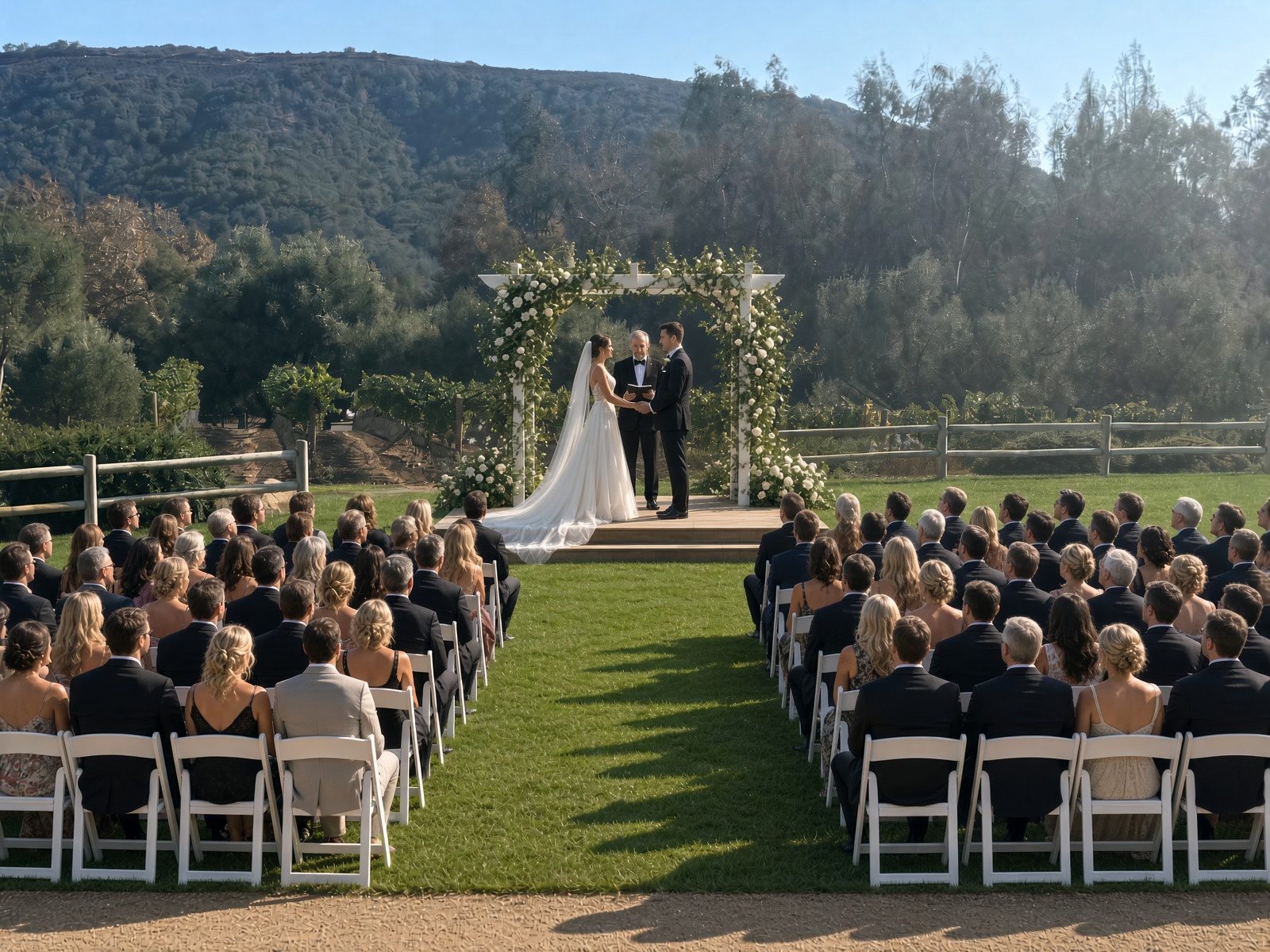
Gatherings of up to seventy-five. A ceremony on the south lawn, cocktails on the terrace, dinner outside. The suite is booked only on Airbnb.
Inquire