
Chapter IV · 4 of 12
Parker Dear and Five Sons
A lost rancho, five boys on a creekside knoll, and the letters that follow them in and out of Aliso.
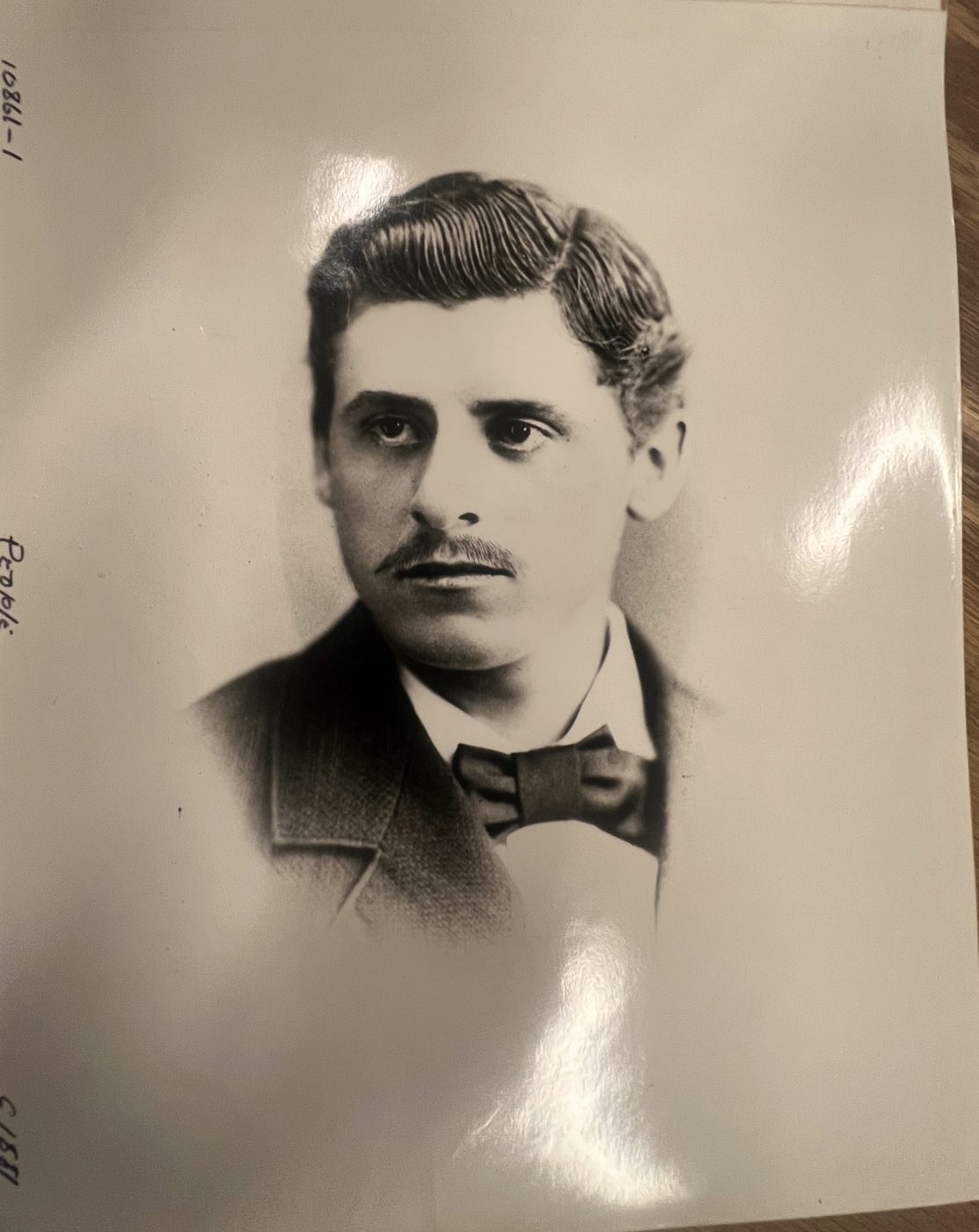
Parker Dear enters the photographs in the late 1880s as a rancho owner at Santa Rosa: oak shade, a crowd, a fourteen-room house in the distance. May Day picnics on that ranch look like the California booster pamphlets promised. He had not been born to it. Liverpool, then a seventeen-year-old’s inspection in 1876, then his father’s English capital in a Temecula syndicate — that is how Santa Rosa became his to lose. Foreclosure around 1893, a stay at Guajome and at the Myers House in Oceanside, and Las Violetas was a different scale. Five sons in a small adobe, then in a larger one on a knoll, is a different sound than a grant ranch of tens of thousands of acres.
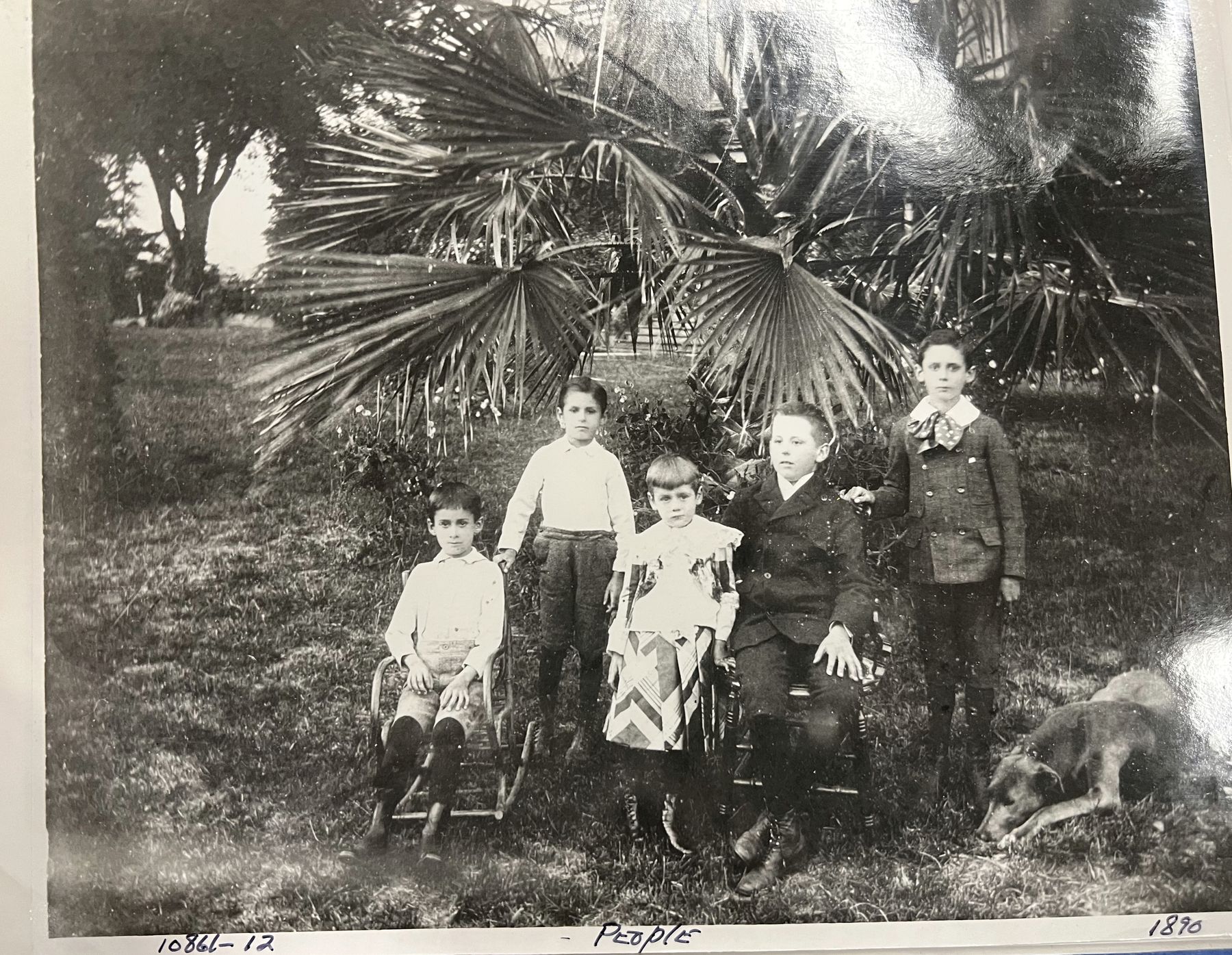
The boys are not a number. They are Parker Jr., the eldest, sixteen in the summer of 1898; James — Jimmie in the inquest — thirteen that same night, who went into the house for his father’s Hollenbeck twelve-gauge; Gilbert, in the household when the shot was fired; Bandini, named with Gilbert on a steamer notice in October 1904 when Elena and Parker left for Los Angeles; and a fifth son the school census counts and the newspapers do not always name. The Aliso District roster for the year ending in 1896 already lists Parker Dear with five boys. They were enrolled. They walked to the same schoolhouse as the Connors and Lusardi children. In 1897 a young woman chosen to teach the Aliso term boarded with the family in the westernmost wing — the School Teacher’s Room — while the knoll adobe was being finished.
Parker wrote. The Cave Couts papers at the Huntington hold decades of his letters to Elena’s brother — business, weather, fear, wine, money, the boys. In 1884, from Guatemala, Cave already resented that Ysidora treated Parker as the man who could handle the accounts. In 1886 the Dears lost a suit to take Guajome from Ysidora. In April 1895 they sold Cave and Lily what interest they still held, the same weeks they closed on Las Violetas. He served as inspector and later officer at the Aliso Precinct polling place, which was the schoolhouse. He petitioned for a public road. He understood the vineyard: fifteen acres when he wrote to Lily in June 1895, and in time a winery in the old adobe below. He also understood that Aliso was not Santa Rosa, and that the neighborhood was not Guajome. A later chapter takes up the night in 1898 and the fire in 1899. What belongs here is the household those events interrupted: a father who had lost a rancho, a mother in poor health, five sons growing up between the knoll and the creek.
The documentary work assembled by Greg White and Alexa Clausen, and extended by Hagen, traces them through transfers and notices. Real estate moved to Elena, then, years later, away. Hotel registers pick the couple up in 1894, before the move, and pick Elena up again. Society columns did not stop when the ranch got smaller; they merely had less to say. In 1904 Parker Jr. was in another fight by the winery — the San Diego Union still oriented the neighborhood by the shooting six years earlier. That autumn the family shipped a carload of household goods toward Los Angeles.
Connections outward matter as much as the rooms. Through Elena the site touches Rancho Guajome, Rancho Buena Vista, and the Couts family; through Parker it touches Rancho Santa Rosa. Las Violetas is not an isolated curiosity. It is a node in the network of San Diego and Riverside ranchos, occupied at the moment when that network was already being broken into smaller pieces by debt, inheritance, and the American land market. A field-school Saturday on Questhaven Road is not a detour from “real” San Diego history. It is one of the places that history actually happened, at a scale a trowel can reach. Parker had been born in Liverpool. He died on 23 November 1939, at eighty, long after Alhambra had become home. In the 1920s the five sons played exhibition baseball as the Parker Bros.
Sources for this chapter
- San Diego History Center. Studio portrait, catalog 10861-1, People, about 1881. Identified here as Parker Dear.
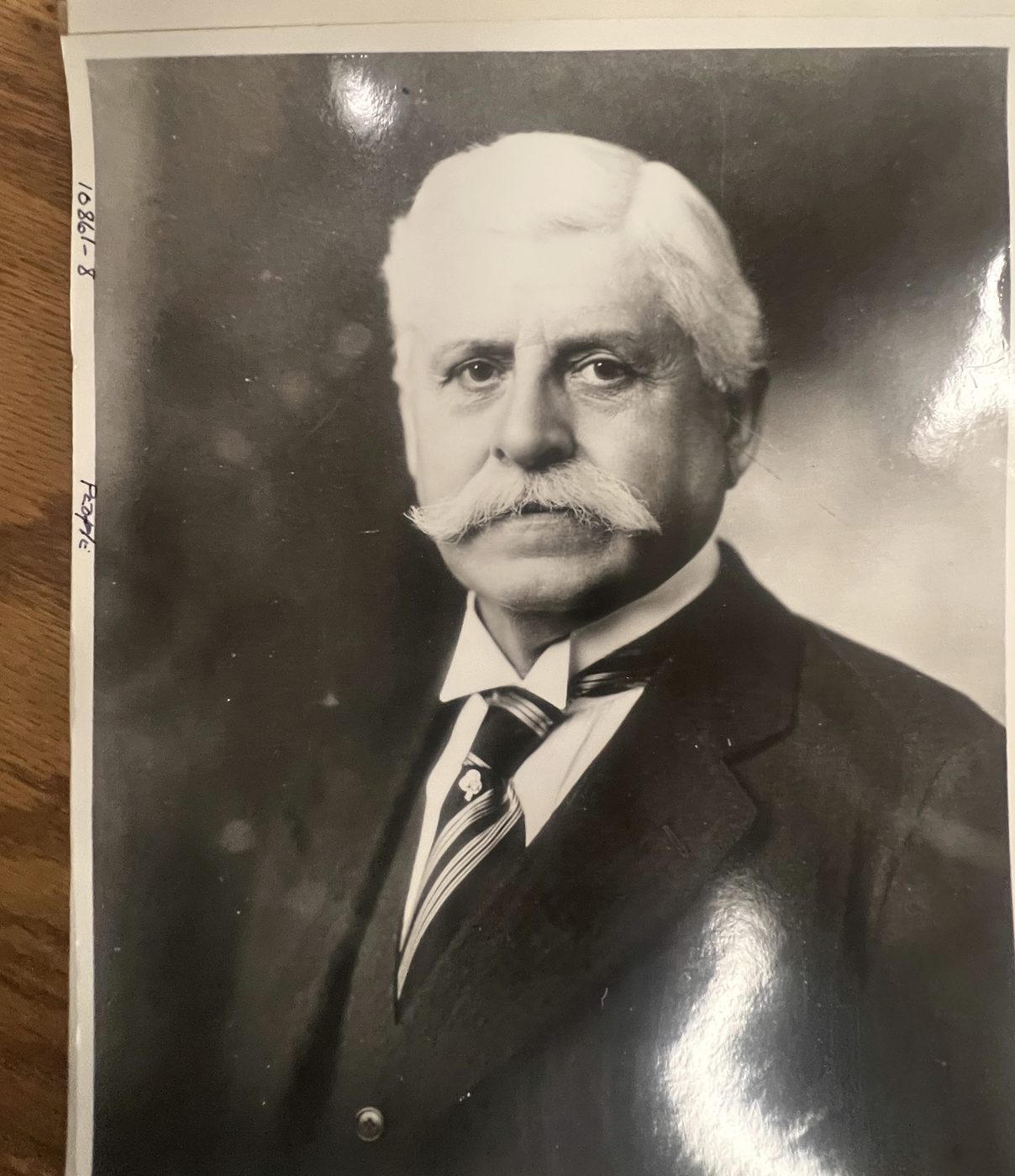
- San Diego History Center. Studio portrait, catalog 10861-8, People.
- San Diego History Center. Group of children under palms, catalog 10861-12, People, dated 1890 on the mount.
- Hagen, Sue. The House Elena Built, 2024. Santa Rosa foreclosure ca. 1893; Guajome and Myers House, Oceanside; personal letters, newspaper notices, school census, and real-estate transfers.
- Huntington Library. Cave Couts Papers. Parker Dear to Cave Couts, Jr., 1883–1938; CT 544, 4 June 1895; Cave Couts, Jr., to Parker Dear, Mesa Grande, 29 March 1895.
- Bollinger, Sharon Loughlin. Cave Johnson Couts, Jr. — Last of the Dons. M.A. thesis, University of San Diego, 1976. 1886 suit (San Diego Union, 23 November 1886); deed of 3 April 1895, Book 237, p. 388.
- San Diego County. Coroner’s Inquest Papers, Case File 548, F116-1, Ramon Morales, 31 August 1898.
- San Diego Union, 8 September 1904. Fight “by the winery.”
- Clausen, Alexa. Occupant table and Parker Dear biographical notes in the Palomar field manual, 2026.
The same knoll
Stand here for a day.
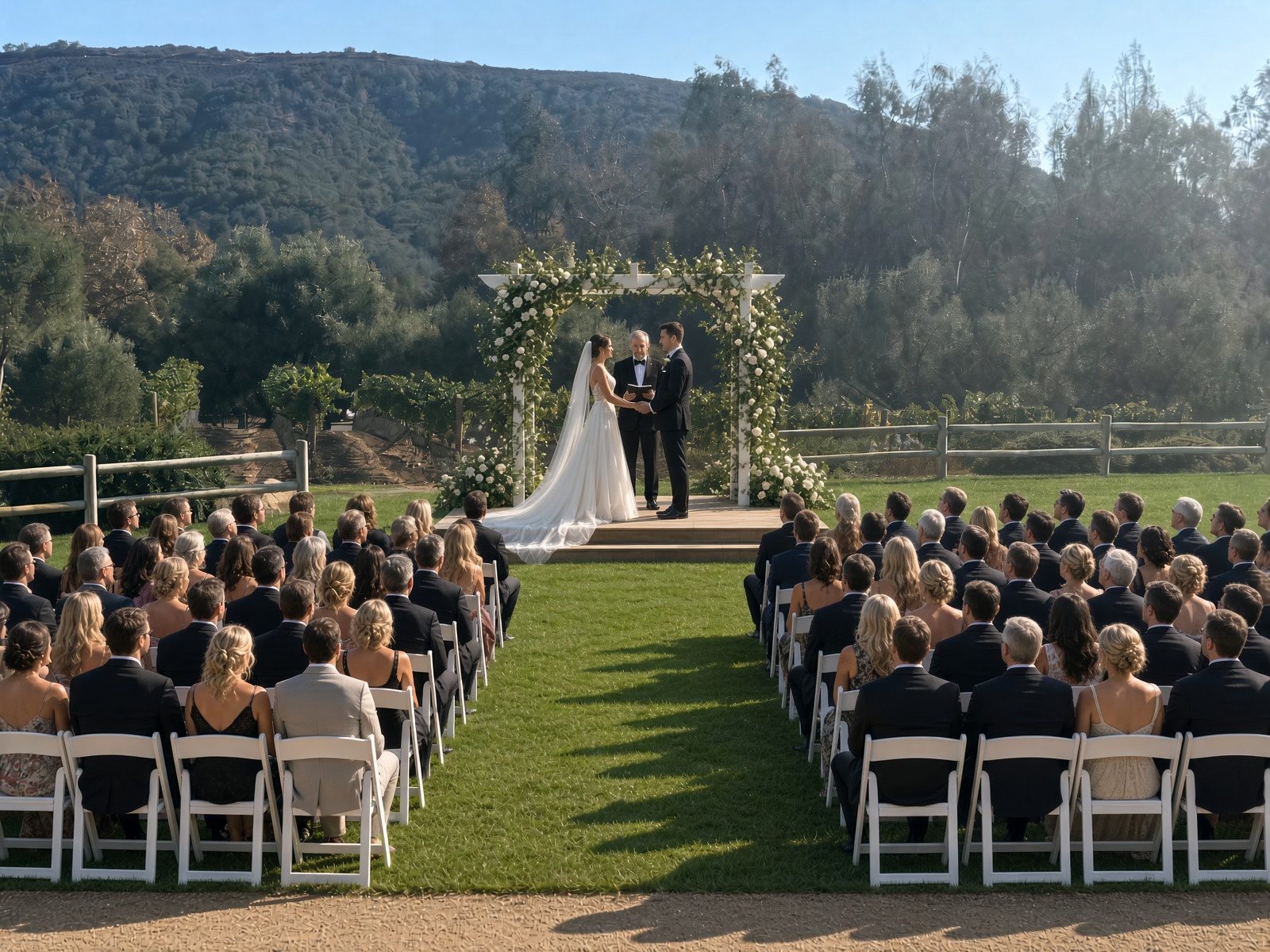
Gatherings of up to seventy-five. A ceremony on the south lawn, cocktails on the terrace, dinner outside. The suite is booked only on Airbnb.
Inquire